
Tag: Small Business Sales

  • Sales Prospecting Strategies for Small Business

    Sales Prospecting Strategies for Small Business

    Sales Prospecting Strategies for Small Business

    Businesses that follow a structured prospecting process generate 50% more sales-ready leads at 33% lower cost — here’s how to build yours.

    Why Prospecting Is the Lifeblood of Small Business Sales

    Picture this: Maria runs a seven-person marketing agency in Austin, Texas. Her business is profitable — but only when her three biggest clients stay happy. The moment one of them pauses their retainer, revenue drops 30% overnight. The root problem isn’t service quality. It’s that Maria stopped prospecting the moment her pipeline looked full.

    According to the Rain Group’s 2024 Top-Performing Sales Organization report, 42% of salespeople say prospecting is the hardest part of their job — yet it’s the single activity most directly linked to sustainable revenue growth. For small business owners wearing multiple hats, that difficulty is multiplied by limited time, no dedicated sales team, and often, no clear process at all.

    This guide breaks down exactly what sales prospecting is, which methods actually work for small businesses in 2026, how to build a repeatable system from scratch, and the costly mistakes that keep most owners stuck in a feast-or-famine revenue cycle. Whether you sell B2B services, physical products, or software, you’ll leave with an actionable roadmap you can start using this week.

    What Is Sales Prospecting and How Does It Work?

    Sales prospecting is the process of identifying and reaching out to potential customers — called prospects — who fit your ideal customer profile and have a reasonable chance of buying from you. It’s the very first stage of your sales cycle, happening before demos, proposals, or negotiations.

    Prospecting is often confused with lead generation, but there’s a meaningful difference. Lead generation is typically marketing-driven — someone fills out a form on your website or downloads an ebook. Prospecting is sales-driven — you actively identify and contact people who haven’t raised their hand yet.

    For small businesses, this distinction matters because you usually can’t afford to wait for inbound leads alone. A proactive prospecting system gives you control over your pipeline and protects you from revenue volatility.

    The prospecting process generally follows five steps:

    1. Define your Ideal Customer Profile (ICP) — industry, company size, geography, budget range, decision-maker title
    2. Build your prospect list — using LinkedIn, industry directories, trade associations, or existing networks
    3. Choose your outreach channels — email, phone, LinkedIn, in-person events
    4. Make contact and qualify — determine if the prospect has the need, budget, and authority to buy
    5. Move qualified prospects into your sales pipeline — for follow-up, demos, or proposals

    The entire goal of prospecting is not to sell — it’s to start a conversation with the right people and determine if a deeper discussion makes sense for both parties.

    Key Benefits of a Structured Prospecting Process

    A HubSpot 2025 Sales Trends Report found that businesses with a defined prospecting process close 28% more deals annually compared to those relying purely on inbound referrals and word-of-mouth. Here’s why that number is so significant for small business owners specifically.

    Predictable Revenue

    When you prospect consistently — say, dedicating 90 minutes every weekday — you create a steady flow of new opportunities entering your pipeline. Over time, you can measure your conversion rates and forecast revenue with real accuracy. If you know that 10 cold emails produce one qualified call, and three qualified calls produce one closed deal worth $5,000, your math becomes operational.

    Reduced Dependency on Any Single Client

    Most small businesses that struggle with cash flow do so because they rely on two or three clients for the majority of their revenue. Consistent prospecting builds a diversified client base that acts as a financial buffer. For deeper insight into protecting your revenue streams, see our guide on Business Revenue Diversification for Small Business.

    Lower Customer Acquisition Cost Over Time

    Targeted prospecting — reaching only people who match your ICP — reduces wasted effort. You’re not pitching unqualified leads or spending marketing budget on broad audiences. Over time, a refined prospect list dramatically lowers your cost per new customer. For more on optimizing that metric, explore our resource on How to Lower Customer Acquisition Cost for Your Business.

    Competitive Intelligence

    Active prospecting keeps you in constant conversation with your market. You learn what problems buyers are struggling with right now, what competitors they’re considering, and what objections are most common — intelligence that improves your product, your pitch, and your positioning.

    How to Build Your Sales Prospecting System: Step-by-Step

    The Bureau of Labor Statistics reports that 20% of small businesses fail within their first year — and lack of consistent sales is one of the top cited reasons. The following process is built to prevent that outcome by giving you a repeatable, scalable prospecting engine.

    Step 1: Define Your Ideal Customer Profile (ICP)

    Before you prospect anyone, you need clarity on who you’re actually targeting. Your ICP is a detailed description of the type of customer most likely to buy, stay, and refer others.

    For a B2B business, your ICP might include: company size (10-50 employees), industry (professional services), annual revenue ($1M-$10M), geography (continental US), decision-maker title (COO or Operations Director), and a specific pain point (manual reporting processes wasting 10+ hours per week).

    Review your top 10 existing clients and identify what they have in common. That pattern is the foundation of your ICP.

    Step 2: Build a Targeted Prospect List

    With your ICP defined, you can build your list using:

    • LinkedIn Sales Navigator — filter by title, company size, industry, and geography. Plans start around $99/month but typically pay for themselves quickly with even one closed deal.
    • Industry directories and associations — the National Federation of Independent Business (NFIB), trade associations, and chamber of commerce member directories are goldmines.
    • ZoomInfo or Apollo.io — databases that provide verified contact information including direct phone numbers and email addresses.
    • Google Maps / Yelp — for locally-focused businesses targeting other local businesses.
    • Your own network — former colleagues, vendors, and referral partners often know exactly who fits your ICP.

    Aim to build a list of at least 100 qualified prospects before launching outreach. Quality matters far more than volume here.

    Step 3: Choose Your Primary Outreach Channels

    Not every channel works for every business. Here’s a realistic breakdown:

    • Cold email — High scalability, low cost, works well for B2B. Industry average open rates hover around 20-25% when properly targeted. Use personalized subject lines and keep the first email under 150 words.
    • LinkedIn outreach — Excellent for B2B with longer sales cycles. Connection request followed by a value-first message (not a pitch) tends to outperform generic templates.
    • Cold calling — Underused and often overlooked. RAIN Group data shows that 69% of buyers accepted at least one cold call in the past year. Effective when paired with prior email contact.
    • In-person events and trade shows — High-cost but high-conversion. Industry conferences often provide the most direct access to decision-makers.
    • Referral-based prospecting — The highest-converting channel in virtually every study. Ask satisfied clients for specific introductions, not generic referrals. For a full framework on building this systematically, see our Referral Marketing for Small Business guide.

    Step 4: Write Outreach That Gets Responses

    The single biggest mistake in prospecting outreach is leading with your product. Effective prospecting messages follow this structure:

    1. Personalized opener — Reference something specific about the prospect (recent company news, a post they shared, a mutual connection)
    2. Relevant problem statement — Describe a challenge their type of business commonly faces, not what you sell
    3. Brief credibility signal — One sentence about who you are and one relevant result you’ve delivered for similar companies
    4. Low-friction call to action — Ask for a 15-minute call or a simple yes/no question, never a 45-minute demo on the first touch

    Step 5: Build a Follow-Up Cadence

    Research from Salesforce consistently shows it takes an average of 8 touchpoints to reach a new prospect. Most small business owners give up after 1-2. Build a structured follow-up sequence:

    • Day 1: First email or LinkedIn message
    • Day 3: Follow-up email with a different angle or piece of value (article, case study)
    • Day 7: Phone call attempt
    • Day 14: Final email — honest, direct, and respectful of their time

    Automate this sequence using tools like Mailshake, Lemlist, or even a free CRM like HubSpot — but never let automation replace genuine personalization.

    Step 6: Qualify Before You Pitch

    Once a prospect responds, resist the urge to immediately jump into a sales pitch. Use a simple qualification framework like BANT: Does the prospect have the Budget, Authority, Need, and Timeline that make them a real opportunity? This saves you from investing hours in prospects who were never going to buy.

    Costs, Fees, and Risks of Different Prospecting Methods

    The CFPB notes that small businesses often underestimate the indirect costs of sales activities. Here’s a realistic look at what each prospecting method actually costs — in both money and time.

    • LinkedIn Sales Navigator: ~$99-$149/month. ROI depends entirely on your average deal size. Not worth it if your average contract value is under $2,000.
    • Apollo.io or ZoomInfo: $50-$250/month depending on plan. Risk: data can be outdated. Always verify emails before bulk sending to protect your domain reputation.
    • Cold email at scale: Risk of CAN-SPAM Act violations if you don’t include a physical business address and unsubscribe option. The FTC enforces penalties up to $51,744 per email that violates CAN-SPAM rules.
    • Trade shows: $2,000-$20,000+ depending on booth size and conference. High opportunity cost if you go without a clear ICP and follow-up plan.
    • Your time: This is your biggest real cost. At $150/hour (a conservative value for a small business owner’s time), 10 hours of weekly prospecting costs $1,500/week. That means you need to close enough deals to justify it — and you will, with a consistent system.

    Common Sales Prospecting Mistakes to Avoid

    A Gartner study found that 77% of B2B buyers describe their last purchase as extremely complex or difficult. Often, poor prospecting makes the process worse before it even starts. Avoid these critical errors:

    Mistake 1: Prospecting Without a Defined ICP

    Spraying generic messages to any business with a pulse is the number-one time waster in small business sales. When your ICP isn’t defined, your conversion rates are low, your rejection rates are high, and you burn out fast. Fix: spend two hours reviewing your best clients and building a written ICP before any outreach.

    Mistake 2: Treating Prospecting as an Event, Not a System

    Many owners prospect intensely when revenue dips, then stop completely when the pipeline fills up — creating the feast-or-famine cycle. This is the most dangerous pattern in small business sales. Fix: block 60-90 minutes every business day for prospecting, regardless of how full your pipeline looks today.

    Mistake 3: Pitching Too Early

    The first email is not the place to explain your pricing, packages, or features in detail. Buyers tune out immediately when they feel like they’re being sold to before being understood. Fix: your first message should show that you understand their world, not that you want their money.

    Mistake 4: Giving Up After One or Two Touches

    As noted above, eight touchpoints is the industry average for first contact. Most small business owners stop at two, leaving money on the table. Fix: build and stick to a multi-touch follow-up sequence that respects the prospect’s time while staying consistently visible.

    Mistake 5: Failing to Track Your Numbers

    If you don’t know your contact-to-call rate, call-to-proposal rate, and proposal-to-close rate, you can’t improve your system. Fix: use a simple spreadsheet or free CRM to track every prospect from first contact to close or disqualification. Review the data monthly.

    Alternatives to Cold Prospecting

    Cold outreach isn’t the only path to new business. Depending on your situation, these alternatives may deliver stronger ROI.

    Inbound Content Marketing

    Pros: Attracts prospects who are already interested; builds brand authority over time; lower long-term cost per lead.
    Cons: Slow to generate results (typically 6-12 months to gain traction); requires consistent content investment.

    Best for: Businesses with a 12+ month runway who can invest in SEO and content now for future payoff.

    Strategic Partnerships and Channel Sales

    Pros: Access to an existing audience; built-in credibility; faster trust-building.
    Cons: Revenue sharing required; dependent on partner’s activity level; risk of misaligned incentives.

    Best for: Service businesses that can create complementary, non-competing partnerships — for example, a bookkeeper partnering with a business attorney.

    Event-Based Prospecting

    Pros: Face-to-face conversations convert at far higher rates than digital outreach; relationship-building is faster.
    Cons: High time and money cost; geographically limited; results can be inconsistent.

    Best for: Local service businesses or those with high-ticket offerings where one client justifies a $3,000 conference ticket.

    Frequently Asked Questions About Sales Prospecting

    How many prospects should I contact per week as a small business owner?

    Generally speaking, 20-30 new outreach contacts per week is a realistic and sustainable target for a solo owner-operator. That’s 4-6 new contacts per business day — manageable within a 90-minute prospecting block. Scale up once you have a clear system and can measure your conversion rates at each stage.

    Is cold email legal for B2B outreach?

    Yes, in most cases B2B cold email is legal in the US under CAN-SPAM Act guidelines, as long as you include your business name, a physical mailing address, and an unsubscribe mechanism in every email. Always consult legal counsel if you’re uncertain about your specific situation, particularly if you’re emailing outside the US where GDPR may apply.

    How long does it take to see results from a new prospecting system?

    Most small businesses see their first qualified conversations within 2-4 weeks of launching a structured prospecting campaign. Closed deals typically follow within 30-90 days, depending on your sales cycle length. Patience and consistency in the first 60 days are critical — the system needs time to generate data you can learn from.

    Should I hire someone to do prospecting for me?

    Hiring a Sales Development Representative (SDR) or outsourcing to a prospecting agency can make sense once your average deal size exceeds $5,000 and you have a proven message that generates responses. Before that threshold, building the system yourself ensures you understand the market deeply enough to train and manage someone else later.

    What’s the best CRM for small business prospecting?

    For businesses just getting started, HubSpot CRM (free tier) or Pipedrive ($15-25/user/month) are widely used and well-reviewed. The best CRM is the one your team will actually use consistently — features matter far less than adoption. Avoid over-engineering your tech stack before you have a steady volume of prospects to manage.

    Conclusion: Build the Habit Before You Need the Results

    Sales prospecting is one of the highest-leverage activities a small business owner can invest time in — but only when done with a clear system, a defined target, and the discipline to keep going even when the pipeline looks full. The businesses that grow consistently aren’t necessarily better at closing deals. They’re better at finding the right conversations to have in the first place.

    Start this week by doing three things: write your Ideal Customer Profile, build a list of 50 qualified prospects, and draft your first outreach message. Don’t wait until everything is perfect. A good system executed consistently will always outperform a perfect system that never gets off the ground.

    As with any business strategy, your results will depend on your specific market, offer, and execution. Consult with a business advisor or sales coach who can review your specific situation before making significant investments in tools or team members.

    This article is for educational purposes only and does not constitute financial, tax, or investment advice. Always consult a licensed financial advisor, CPA, or attorney before making financial decisions.


  • Sales Territory Planning: A Small Business Guide

    Sales Territory Planning: A Small Business Guide

    Why Territory Planning Can Make or Break Your Sales Team

    Imagine two sales reps with equal talent, equal products, and equal drive — but one consistently hits quota while the other struggles. More often than not, the difference isn’t skill. It’s territory design.

    According to a Salesforce State of Sales report, companies with a structured territory planning process see up to 20% higher revenue attainment compared to those that assign territories informally. For small business owners running lean sales teams, that gap can mean the difference between growth and stagnation.

    In this guide, you’ll learn exactly how to build a sales territory plan from scratch — including how to segment your market, balance workloads, assign accounts strategically, and measure results over time. Whether you have one salesperson or ten, a smart territory plan gives every rep the best possible shot at winning.

    This is for educational purposes — consult a licensed financial advisor or business consultant for personalized guidance specific to your company.

    What Is Sales Territory Planning and How Does It Work?

    Sales territory planning is the process of dividing your target market into defined segments — called territories — and assigning each segment to a specific salesperson or team. Territories can be organized by geography, industry vertical, company size, product line, or customer type.

    The goal is simple: make sure every potential customer gets the right level of attention from a rep who has the bandwidth and context to serve them well.

    In most cases, small businesses start by assigning territories geographically — a rep covers a specific state, region, or zip code cluster. But as your business matures, more sophisticated models emerge. B2B companies often assign territories by industry vertical (healthcare vs. manufacturing), while SaaS firms frequently use company size (SMBs vs. enterprise accounts) as the dividing line.

    According to the Bureau of Labor Statistics, there are over 1.8 million wholesale and manufacturing sales representatives in the US alone. For businesses employing even a fraction of that workforce, smart territory assignment isn’t a luxury — it’s a revenue management decision.

    Here’s what an effective territory plan defines:

    • Account ownership: Who owns each customer relationship
    • Revenue potential: Estimated deal value within each territory
    • Workload balance: Fair distribution of accounts and activity requirements
    • Performance benchmarks: Quota targets aligned to territory size

    Key Benefits of a Structured Territory Plan

    Many small business owners skip formal territory planning because it feels like corporate overhead. That’s a costly assumption. Here’s what a well-designed territory plan actually delivers:

    1. Reduces territory conflict and overlap. Without clear ownership, two reps can chase the same account — wasting resources and confusing the prospect. A clear territory plan eliminates those conflicts before they start.

    2. Increases rep motivation and accountability. When reps know exactly what accounts they own, they’re more likely to develop deep relationships and feel ownership over results. According to Gartner, reps with balanced, well-defined territories report higher job satisfaction and lower turnover rates — a meaningful factor when the cost of replacing a sales rep can run 1.5x to 2x their annual salary.

    3. Improves forecasting accuracy. When territories are consistent and measurable, it becomes much easier to forecast sales with confidence. You can project revenue by territory, spot underperformance early, and allocate resources where they’re needed most.

    4. Optimizes customer coverage. Territory planning ensures your highest-potential accounts get the most attention — and that smaller accounts aren’t entirely neglected. The result is better customer experience across the board.

    5. Reduces customer acquisition costs. Efficient territory design means less wasted travel time, fewer duplicate outreach efforts, and faster deal cycles. That directly impacts your customer acquisition cost (CAC) — one of the most important metrics in small business sales.

    How to Build a Sales Territory Plan: Step-by-Step

    Ready to build or redesign your territory plan? Follow these steps in order. Skipping ahead typically leads to imbalanced assignments that frustrate your team and leave revenue on the table.

    1. Step 1 — Define your total addressable market (TAM).

      Start by identifying every business or individual who could realistically buy from you. Pull data from your CRM, LinkedIn Sales Navigator, ZoomInfo, or US Census Bureau industry data. Segment this list by geography, industry, company size, and estimated deal value. This becomes the raw material for your territory map.

    2. Step 2 — Score and tier your accounts.

      Not all accounts are equal. Use a tiered scoring model: Tier 1 accounts are highest-value, most likely to close quickly. Tier 2 accounts have strong potential but require more nurturing. Tier 3 accounts are low-priority or long-shot opportunities. Score accounts based on factors like annual revenue, number of employees, past purchase history, and industry fit.

    3. Step 3 — Analyze rep capacity and coverage requirements.

      A single rep can typically manage between 25 and 150 accounts, depending on deal complexity and sales cycle length. Enterprise reps handling complex, six-figure deals may only carry 15-30 accounts. Inside sales reps working transactional deals can cover hundreds. Map your account inventory against realistic rep capacity before assigning territories.

    4. Step 4 — Design territory boundaries.

      Group accounts into logical territory clusters using your scoring data and capacity model. If you’re going geographic, tools like Salesforce Maps, Maptive, or even Google Sheets with zip code data can help visualize coverage. Aim for territories that are roughly equal in revenue potential, not necessarily in geographic size or raw account count.

    5. Step 5 — Assign reps strategically, not arbitrarily.

      Match rep strengths to territory characteristics. A rep with deep healthcare industry knowledge should probably own your healthcare vertical, even if another rep has more seniority. Consider factors like language skills, technical expertise, and existing relationships when making assignments.

    6. Step 6 — Set territory-specific quotas.

      Once territories are assigned, set revenue quotas that reflect the realistic potential within each territory — not just a blanket company-wide number divided equally. A rep covering Manhattan will have different market dynamics than one covering rural Nebraska. The IRS and most accounting frameworks treat sales compensation as a deductible business expense, so structuring fair, performance-based quotas also has tax implications worth discussing with your CPA.

    7. Step 7 — Document and communicate the plan.

      Put the territory plan in writing. Share it with your full sales team, customer success team, and leadership. Make sure every rep knows which accounts they own, what the expectations are, and how disputes will be resolved. Ambiguity is the enemy of execution.

    8. Step 8 — Build a review cadence.

      Territory plans should be reviewed quarterly and formally redesigned at least annually. Market conditions shift, reps leave or join, and account potential changes. Build flexibility into your plan from day one.

    Costs, Risks, and Practical Considerations

    Territory planning isn’t free — in time, tools, or organizational energy. Here’s what to budget for and watch out for:

    Software costs: Basic territory mapping can be done in spreadsheets, but growing teams often need dedicated tools. Salesforce Maps runs approximately $75/user/month at the lower tiers. Alternatives like Maptive start around $99/month for small teams. If you’re already paying for a CRM, check whether territory management features are included.

    Reorganization disruption: Changing existing territory assignments can temporarily reduce productivity. Reps who lose high-value accounts they’ve developed may feel demoralized. Plan transitions carefully, communicate the rationale clearly, and consider grandfather clauses that let reps retain a few legacy accounts during transitions.

    Data quality risk: Your territory plan is only as good as the data behind it. Garbage in, garbage out. Invest in cleaning your CRM data before building your territory map — duplicate records, outdated contact info, and missing firmographic data will undermine even the best planning process.

    Legal considerations: In some states, commission agreements tied to territory assignments may have legal implications if territories are reorganized. Consult an employment attorney before making significant changes, especially if your reps are on draw-against-commission plans. The CFPB and state labor boards have issued guidance on commissioned employee rights that varies by jurisdiction.

    Equity risk: If territories are significantly unequal in potential, you’ll face morale and retention problems. Document the methodology you used to balance territories so you can defend the design to your team.

    Common Mistakes to Avoid

    Even well-intentioned territory plans fail when these mistakes creep in:

    Mistake 1 — Designing territories by geography alone. Geographic boundaries are easy to draw but often produce wildly imbalanced revenue potential. A territory covering three rural states might have half the deal potential of one covering a single metro area. Always balance territories by estimated revenue potential, not map size.

    Mistake 2 — Ignoring rep capacity and deal complexity. Assigning 200 accounts to a rep managing complex enterprise deals is a setup for failure. Over-loaded reps can’t give accounts the attention they deserve, leading to missed opportunities and customer churn. Calibrate account counts to realistic workload — not just headcount math.

    Mistake 3 — Setting it and forgetting it. The biggest territory planning mistake is treating the plan as a one-time document. Markets change, company strategy evolves, and personnel turns over. Build a quarterly review process into your sales calendar and make annual redesigns a formal part of your sales planning cycle.

    Mistake 4 — Not involving reps in the design process. Reps who feel blindsided by territory changes are far less likely to embrace the new plan. While you shouldn’t let reps design their own territories, gathering their input on account relationships, market dynamics, and competitive landscape makes for a smarter plan — and smoother adoption.

    Mistake 5 — Failing to align territory plans with your broader lead generation strategy. Your territory plan should connect directly to how you generate demand. If your lead generation strategy is focused on a specific vertical or region, your territory design should reflect that priority — not work against it.

    Alternatives to Traditional Territory Planning

    Depending on your business model, a traditional geographic territory plan may not be the best fit. Here are three alternatives worth considering:

    1. Account-Based Selling (ABS). Instead of assigning territories, you assign specific named accounts to each rep. This works well for B2B businesses with a clearly defined ideal customer profile and a small universe of high-value targets. Pros: extreme focus, deep relationship development. Cons: difficult to scale, requires strong data on target accounts.

    2. Vertical or Industry-Based Segmentation. Reps specialize in specific industries (healthcare, manufacturing, retail) rather than geographies. Pros: reps develop deep domain expertise that accelerates trust and deal velocity. Cons: may create geographic inefficiencies and require more travel.

    3. Hybrid Model — Inside/Outside Split. Inside sales reps handle smaller, transactional accounts remotely while field reps focus on high-value, strategic accounts. This is increasingly common in the post-pandemic era, where buyers are more comfortable with remote selling. Pros: cost-efficient, scalable. Cons: requires clear handoff protocols and strong CRM discipline to avoid account confusion.

    Frequently Asked Questions

    How often should I redesign my sales territories?
    Generally speaking, you should review territories quarterly and formally redesign them at least once per year — ideally aligned with your fiscal year planning cycle. Major triggers for mid-year redesigns include significant headcount changes, new product launches, or entry into new markets.

    What’s the best way to balance territory potential when I don’t have good data?
    Start with proxy data from public sources. The US Census Bureau’s County Business Patterns dataset provides industry-level employment and establishment data by county — a useful proxy for market potential when you lack proprietary data. US Small Business Administration (SBA) regional data can also help estimate demand by geography.

    How do I handle accounts that fall in multiple territories?
    Establish a clear written policy before conflicts arise. Common approaches include assigning accounts based on headquarters location, primary decision-maker location, or a designated "strategic accounts" team that sits outside the territory structure entirely. Ambiguity costs you — document the rules upfront.

    Should solo entrepreneurs bother with territory planning?
    Yes — even if you’re a team of one. Defining your target market by geography, industry, or company size forces strategic clarity about where to spend your limited time. Think of it as a personal focus filter rather than a team management tool. It prevents the common trap of chasing every opportunity equally, which leads to exhaustion and mediocre results across the board.

    Can territory planning affect my business taxes?
    Indirectly, yes. Sales compensation structures tied to territories — including commission plans, draw arrangements, and performance bonuses — are generally deductible as ordinary business expenses under IRS guidelines. However, how you classify reps (W-2 employees vs. 1099 contractors) significantly affects your tax obligations. Consult a CPA before finalizing any compensation structure tied to your territory plan.

    Build Territories That Work as Hard as Your Team Does

    Sales territory planning isn’t about drawing lines on a map. It’s about making deliberate decisions about where your team focuses its energy — and ensuring those decisions are backed by data, not gut instinct or office politics.

    Start with your market data, tier your accounts honestly, balance territories by revenue potential, and build a review process that keeps the plan current. A well-designed territory plan reduces conflict, improves morale, and creates the conditions for sustainable revenue growth.

    The work upfront is real — but so are the returns. Companies that invest in structured territory planning consistently outperform those that don’t, and for a small business competing against larger players, that edge matters enormously.

    Your next step: pull your CRM account list this week, run a basic tier-scoring model, and identify whether your current territory assignments reflect revenue potential — or just habit.

    This article is for educational purposes only and does not constitute financial, tax, or investment advice. Always consult a licensed financial advisor, CPA, or attorney before making financial decisions.

  • Lead Generation for Small Business: Strategies That Work

    Lead Generation for Small Business: Strategies That Work

    Lead Generation for Small Business: Strategies That Work

    Small businesses that use 3 or more lead generation channels grow revenue up to 2.5x faster than those relying on just one — here’s how to build yours.

    Why Lead Generation Is the Lifeblood of Small Business Sales

    Picture this: Maria runs a boutique accounting firm in Austin, Texas. She’s great at her craft, her clients love her — but every January, she panics. Her referral pipeline dries up, and she has no system for bringing in new business. Sound familiar?

    According to a 2025 HubSpot report, 61% of small business owners say generating consistent leads is their top sales challenge. It’s not that your product or service isn’t good enough. It’s that without a reliable flow of qualified prospects, even the best business stalls out.

    Lead generation — the process of attracting and converting strangers into potential customers — is the engine behind every healthy sales operation. In this guide, you’ll learn what lead generation really means in a small business context, which channels deliver the highest ROI, how to build a system that runs without you chasing every deal manually, and the costly mistakes that kill most lead gen efforts before they start.

    Whether you sell B2B services, run a local shop, or operate an e-commerce store, these strategies are built for your reality — tight budgets, lean teams, and real revenue goals.

    What Is Lead Generation and How Does It Work?

    A lead is any person or business that has shown interest in what you sell. Lead generation is the structured process of attracting those people into your sales ecosystem — and then nurturing them until they’re ready to buy.

    There are two broad types of leads you’ll encounter:

    • Marketing Qualified Leads (MQLs): People who’ve engaged with your content, downloaded something, or signed up for your email list. They’re interested but not ready to buy yet.
    • Sales Qualified Leads (SQLs): Prospects who’ve shown clear buying intent — they’ve requested a quote, scheduled a call, or asked about pricing.

    The lead generation funnel has three stages. At the top, you create awareness through content, ads, and social media. In the middle, you capture contact information via forms, landing pages, or lead magnets. At the bottom, your sales team converts warm leads into paying customers.

    For small businesses, the goal isn’t to generate thousands of random contacts — it’s to attract qualified prospects who actually need what you offer and can afford it. Volume without quality will drain your time and budget fast.

    Key Lead Generation Channels — and What Each One Actually Costs

    The Federal Trade Commission notes that small businesses collectively spend over $200 billion annually on marketing — yet many have no system for measuring which channels actually generate sales. Here’s a breakdown of the most effective channels for small businesses in 2026, with realistic expectations for each.

    1. Search Engine Optimization (SEO) and Content Marketing

    This is the long game — but it pays off. When someone Googles “best bookkeeper in Chicago” or “how to choose a small business insurance plan,” you want your website to appear. Ranking on page one of Google drives free, high-intent traffic month after month.

    The catch: SEO takes 6 to 12 months to show meaningful results. You’ll need to publish helpful, keyword-optimized content consistently. A blog post that answers a common customer question can generate leads for years. Cost-wise, DIY SEO is mostly time. Hiring an agency runs $1,000 to $4,000 per month for small businesses.

    For deeper context on how content drives sales, check out Small Business Pricing Strategy: How to Price for Profit, which explores how value communication — closely tied to content — directly impacts conversion rates.

    2. Pay-Per-Click (PPC) Advertising

    PPC ads on Google or Meta put you in front of buyers immediately. You only pay when someone clicks. Average cost-per-click in the financial services and professional services space runs $5 to $20, according to WordStream’s 2025 industry benchmarks. Local service businesses can see strong ROI when campaigns are tightly targeted.

    The risk is budget bleed. Without proper targeting and landing pages, PPC can eat cash with minimal return. For a full breakdown of how to run profitable paid campaigns, see our guide on PPC Advertising for Small Business.

    3. Email Marketing

    Email remains one of the highest-ROI channels available — the Data & Marketing Association reports an average return of $36 for every $1 spent. For small businesses, email works best when combined with a lead magnet (a free resource, checklist, or webinar) that gets prospects to opt in.

    Once someone is on your list, a nurture sequence of 5 to 7 emails over two to three weeks can convert cold leads into warm buyers — without a single sales call.

    4. Referral Programs and Strategic Partnerships

    Word-of-mouth has always driven small business growth — but you can systematize it. A formal referral program that offers existing clients a reward (a discount, gift card, or cash bonus) for sending new business can dramatically increase your pipeline at almost zero cost.

    Strategic partnerships with complementary businesses work similarly. A CPA firm partnering with a business attorney, for example, can create a two-way referral stream that benefits both parties.

    5. Social Media and Community Marketing

    LinkedIn is the dominant platform for B2B lead generation. Facebook and Instagram work well for local businesses and consumer-facing brands. The key insight most small business owners miss: social media is not a broadcasting tool. It’s a conversation tool. Engage, comment, answer questions, and build relationships — don’t just post product announcements.

    How to Build a Lead Generation System: Step-by-Step

    The difference between businesses that struggle with leads and those that don’t isn’t luck — it’s having a repeatable system. Here’s how to build one from scratch.

    1. Define your ideal customer profile (ICP). Get specific: What industry are they in? What’s their annual revenue or income range? What problem are they trying to solve? The more specific your ICP, the more targeted — and effective — your lead gen will be.
    2. Choose 2 to 3 lead generation channels. Don’t try to be everywhere at once. Pick channels that match your ICP’s behavior. B2B professional services? Start with SEO, LinkedIn, and referrals. Local retail? Try Google Business Profile, email, and community events.
    3. Create a lead magnet. Give prospects something valuable in exchange for their contact information — a free guide, a calculator, a consultation, a checklist. This is how you convert anonymous visitors into identifiable leads.
    4. Build a landing page with a single call to action. Don’t send traffic to your homepage. Build a dedicated page that focuses on one offer and one action. Conversion rates on focused landing pages average 9.7% versus 2% for generic pages, according to Unbounce’s 2025 data.
    5. Set up a CRM to track every lead. A simple CRM (Customer Relationship Management system) lets you see where every prospect is in your pipeline, follow up on time, and stop leads from falling through the cracks. Even a free tool like HubSpot CRM works well for small teams.
    6. Automate your follow-up. Most prospects don’t buy on the first contact. Research from the National Sales Executive Association shows that 80% of sales require 5 or more follow-ups, yet 44% of salespeople give up after just one. Set up automated email sequences to nurture leads over time.
    7. Measure, test, and optimize. Track your cost per lead (CPL), lead-to-customer conversion rate, and revenue per channel. Cut what doesn’t work. Scale what does. Revisit your Sales Forecasting for Small Business process regularly to align your lead volume targets with your revenue goals.

    Costs, Fees, and Hidden Risks in Lead Generation

    Lead generation is not free — even when it looks like it is. Here’s the honest picture.

    Content and SEO: Expect to invest $300 to $1,500 per month in content creation (writing, design, video) if you’re not doing it yourself. DIY content costs time — typically 5 to 10 hours per week for a consistent strategy.

    Paid advertising: Minimum effective budgets for Google Ads start around $500 to $1,000 per month for most local markets. Below that, you won’t get enough data to optimize. Budget for 90 days of testing before expecting consistent results.

    Email marketing platforms: Tools like Mailchimp, Klaviyo, or ActiveCampaign run $25 to $150 per month depending on list size and features.

    CRM software: Free tiers from HubSpot or Zoho work for early-stage businesses. As you scale, paid plans range from $45 to $400 per month.

    Hidden risks to watch:

    • Purchased lead lists: Buying email lists violates CAN-SPAM regulations and typically generates poor results. Avoid entirely.
    • Vanity metrics: Chasing website traffic, social media followers, or email open rates without tying them to actual revenue is a budget trap. Measure leads and customers — not clicks.
    • Over-reliance on one channel: If all your leads come from Google Ads and the platform changes its algorithm or raises costs, your business is exposed. Diversify.

    Common Lead Generation Mistakes Small Businesses Make

    Most lead generation failures aren’t about the channel — they’re about the execution. Here are the most common and costly errors.

    Mistake #1: Targeting everyone and reaching no one. Generic messaging that tries to appeal to all potential customers resonates with none of them. “We help businesses grow” means nothing. “We help women-owned retail businesses in the Southeast reduce inventory costs by 20%” is specific, credible, and compelling. Narrow your focus to amplify your impact.

    Mistake #2: Giving up too early. SEO takes months. Email nurture sequences take weeks. Referral programs take relationship-building. Most small business owners abandon a strategy after 30 days without results — right before it would have started working. Commit to at least 90 days before evaluating any channel.

    Mistake #3: No follow-up system. A lead who fills out a contact form and doesn’t hear back within 24 hours has a dramatically lower conversion probability. According to Lead Response Management research, responding within the first five minutes increases conversion odds by 9x compared to waiting 30 minutes. Speed matters. Automate your first response.

    Mistake #4: Confusing activity with results. Posting on social media daily, sending newsletters, and running ads all feel productive — but if none of it is generating leads or customers, it’s just busy work. Build a simple dashboard that tracks leads by channel, cost per lead, and revenue generated. Review it weekly.

    Mistake #5: Neglecting existing customers as a lead source. Your happiest current customers are your most powerful lead generation asset. Formalize your referral ask, create a customer success story program, and stay top-of-mind with them regularly. It costs five times more to acquire a new customer than to keep an existing one — and existing customers refer at rates new prospects can’t match.

    Alternatives to Traditional Lead Generation

    If you’re not ready for a full multi-channel strategy, here are three focused alternatives that work well for small businesses at different stages.

    Option 1: Strategic Networking and Industry Events. For service-based businesses with high average contract values ($5,000+), face-to-face networking at industry conferences, local chamber events, or professional associations can generate high-quality leads with zero ad spend. The downside: it’s time-intensive and doesn’t scale easily. Best for: Consultants, attorneys, financial advisors, and B2B service providers.

    Option 2: Joint Venture Webinars and Online Events. Partner with a complementary business to host a free webinar. Each partner promotes it to their existing audience — you both collect leads and add value. Cost is low (a Zoom subscription and some prep time). Lead quality is typically high because attendees self-select based on interest. Best for: Coaches, SaaS companies, agencies, and professional services firms.

    Option 3: Google Business Profile Optimization. If you serve a local area, a fully optimized Google Business Profile (formerly Google My Business) can generate a steady stream of inbound leads for free. Businesses with complete profiles are 70% more likely to attract location-based searches, according to Google’s own data. Add photos, collect reviews, post updates, and answer questions. Best for: Local service businesses, restaurants, retail, healthcare, and real estate.

    Frequently Asked Questions About Lead Generation for Small Business

    How many leads does a small business need per month?

    It depends on your average deal size and close rate. If you close 20% of your leads and need 10 new customers per month, you need 50 qualified leads. Work backward from your revenue goal, divide by average customer value, and that tells you your lead volume target. A formal sales forecasting process makes this calculation straightforward.

    What’s the fastest way to generate leads with a small budget?

    Referral programs and Google Business Profile optimization deliver the fastest results with minimal spend. If you have $500 to $1,000 per month, targeted Google Local Services Ads or Facebook lead ads can generate results within days. Pair them with a strong follow-up sequence and you’ll see ROI quickly.

    Is cold outreach still effective for small businesses?

    Cold email and cold calling can work — but only when highly targeted and personalized. Mass cold outreach without personalization has response rates below 1%. When you identify a specific prospect, research them thoroughly, and reach out with a message tailored to their situation, response rates jump to 10% to 20%. Quality beats volume every time.

    How do I know which lead generation channel is working?

    Track three core metrics for each channel: number of leads generated, cost per lead (total spend divided by leads), and lead-to-customer conversion rate. Use UTM tracking links in your digital campaigns to attribute leads accurately in Google Analytics. Review these monthly and shift budget toward your top performers.

    Do I need a CRM to manage leads?

    If you’re handling fewer than 20 leads per month, a well-maintained spreadsheet can work temporarily. Beyond that, a CRM is essential. Without it, leads fall through the cracks, follow-ups get missed, and you have no visibility into pipeline health. Free options like HubSpot CRM are sufficient for most small businesses starting out.

    Building a Lead Engine That Runs Without You

    Lead generation isn’t a one-time project — it’s an ongoing system. The businesses that win consistently aren’t the ones who try the hardest to sell. They’re the ones who’ve built reliable engines that attract, capture, and nurture qualified prospects around the clock.

    Start with your ideal customer profile. Choose two channels that match where your buyers spend time. Build a simple lead magnet, a clean landing page, and an automated follow-up sequence. Add a CRM to track everything. Then measure relentlessly and optimize over time.

    Even modest improvements compound quickly. Moving your lead-to-customer conversion rate from 15% to 20% doesn’t sound dramatic — but on 100 leads per month and a $3,000 average deal, that’s $15,000 in additional monthly revenue.

    The system doesn’t need to be perfect to start. It needs to start to get better. Build it now, optimize it continuously, and your sales pipeline will thank you every quarter.

    This article is for educational purposes only and does not constitute financial, tax, or investment advice. Always consult a licensed financial advisor, CPA, or attorney before making financial decisions.

  • Upselling & Cross-Selling Strategies That Boost Revenue

    Upselling & Cross-Selling Strategies That Boost Revenue

    Introduction

    Small businesses that master upselling and cross-selling can increase average order value by 10% to 30% — without spending a single extra dollar on customer acquisition.

    According to a Forrester Research study, product recommendations driven by upselling and cross-selling account for up to 30% of e-commerce revenues — and the same principle applies to service-based businesses and brick-and-mortar stores. Yet most small business owners leave this revenue sitting on the table every single day.

    Think about the last time you walked into a coffee shop and the barista asked, “Would you like to add a pastry to that?” That’s cross-selling in its simplest form. Or when your cell phone carrier offered you a slightly better plan for just $10 more per month — that’s upselling.

    In this guide, you’ll learn exactly what upselling and cross-selling are, why they work, and how to implement specific strategies in your small business to generate more revenue from every customer you already have. Whether you run a retail shop, a service firm, or an online store, these tactics can meaningfully improve your bottom line.

    What Are Upselling and Cross-Selling — and How Do They Work?

    Before diving into tactics, it helps to be crystal clear on what each term means — because they’re often confused.

    Upselling means encouraging a customer to buy a higher-tier, more expensive version of what they’re already considering. If a client is looking at your $500/month service package, upselling means guiding them toward your $750/month premium package that includes more features or better support.

    Cross-selling means recommending related or complementary products and services alongside what the customer is already buying. If someone buys a laptop from your tech shop, cross-selling means suggesting a carrying case, extended warranty, or screen protector.

    Both strategies work because of a powerful psychological principle: customer acquisition is already done. The prospect has decided to trust you and open their wallet. According to the CFPB’s consumer behavior data, existing customers are 60% to 70% more likely to convert on an additional offer than a cold prospect — who converts at just 5% to 20%.

    In plain terms: the hardest part of selling — earning trust — is already finished. Upselling and cross-selling simply help customers get more value from that decision, while you earn more revenue per transaction.

    These strategies apply across virtually every business type:

    • Retail: Add-on products, premium versions, bundles
    • Service businesses: Upgraded packages, maintenance plans, consulting add-ons
    • SaaS and digital products: Higher-tier plans, premium support, additional user seats
    • Restaurants and food service: Premium ingredients, combo meals, drink pairings

    Key Benefits: Why These Strategies Matter for Your Business

    The financial case for upselling and cross-selling is hard to ignore. Harvard Business Review has reported that acquiring a new customer costs five to seven times more than retaining and growing an existing one. That math alone makes the case for maximizing every current customer relationship.

    Here’s what these strategies can realistically do for your business:

    1. Higher Average Order Value (AOV)

    If your average sale is $200 and you successfully upsell or cross-sell 30% of customers to spend an additional $60, your AOV climbs to $218. Scale that across 500 monthly transactions and you’ve added $9,000 in monthly revenue without a single new customer.

    2. Improved Customer Lifetime Value (CLV)

    Customers who buy more from you tend to stay longer. When they’re invested in your ecosystem — using multiple products or your premium tier — switching to a competitor becomes more costly and inconvenient. This boosts CLV, one of the most important long-term financial metrics in any business.

    3. Better Profit Margins

    In many cases, upsells and cross-sells carry higher margins than baseline products. A software company’s basic plan might have a 40% margin, while its enterprise plan — which uses nearly the same infrastructure — carries a 65% margin. The incremental cost of delivering the upgrade is low; the incremental revenue is high.

    4. Deeper Customer Relationships

    Done right, recommending additional products that genuinely help your customers positions you as a trusted advisor, not just a vendor. That’s a powerful competitive advantage in crowded markets.

    How to Implement Upselling and Cross-Selling: Step-by-Step

    Here’s a practical, actionable framework you can start using immediately — regardless of your business size or industry.

    Step 1: Map Your Product or Service Tiers

    Before you can upsell, you need a clear “good, better, best” structure. Look at your current offerings and create at least two tiers with a meaningful value difference between them. Customers need to clearly understand what they’re getting for more money.

    If you only have one offer, this is the week to build a premium version. Add faster delivery, white-glove support, extended access, or additional features — then price it 25% to 50% higher.

    Step 2: Identify Natural Pairings for Cross-Selling

    Review your sales data. What do customers who buy Product A most commonly buy alongside it or shortly after? That correlation is your cross-sell opportunity. Build a simple pairing map — even in a spreadsheet — so your team knows exactly what to recommend for each core product or service.

    Step 3: Train Your Team on Timing and Framing

    The biggest mistake in upselling is poor timing or clumsy framing. Train your sales staff — or script your checkout flow — to introduce upgrades and add-ons after the customer has already committed to the base purchase, not before. Use consultative language: “Many of our clients in similar situations also add X — it typically saves them Y.”

    Step 4: Use the “10% Rule” for Pricing

    Research from Salesforce suggests that upsell offers are most effective when the additional cost is within 10% to 25% of the original purchase. If someone is spending $400, a $440 to $500 upsell feels accessible. A $900 upsell may cause sticker shock and kill the deal entirely.

    Step 5: Leverage Post-Purchase Cross-Selling

    Not all cross-selling has to happen at the point of sale. Email sequences sent 3 to 7 days after a purchase — when the customer is experiencing the value of what they bought — are highly effective. According to Klaviyo’s 2025 benchmark data, post-purchase email flows generate an average of $0.20 to $0.45 per recipient, far outperforming cold acquisition emails.

    Step 6: Build It Into Your Digital Touchpoints

    If you sell online, add “Customers also bought” or “You might also like” sections on product pages and in the cart. Even simple manual curation of related products — no fancy algorithm required — can lift conversion meaningfully. For service businesses, include upgrade options clearly on your pricing page with a comparison table.

    For more ideas on driving revenue through digital channels, see our guide on Sales Pipeline Management: Close More Deals in 2026.

    Costs, Fees, and Risks to Consider

    Upselling and cross-selling aren’t without risks. Done poorly, they can actually damage customer relationships and hurt your reputation. Here’s what to watch for:

    The Overselling Risk

    Pushing upgrades or add-ons that don’t genuinely benefit the customer is a fast track to refund requests, negative reviews, and lost trust. The FTC has also issued guidance around deceptive add-on practices — particularly for subscription services where upsells are buried in fine print or added without clear consent. Always be transparent.

    Team Training Costs

    If you have a sales team, implementing these strategies requires time and investment in training. A poorly trained rep who feels pushy or scripted can do more damage than no upselling at all. Budget for at least a few hours of structured role-play and coaching per quarter.

    Technology Costs

    For e-commerce businesses, recommendation engines and email automation tools carry monthly fees. Platforms like Klaviyo, Mailchimp, or Shopify’s built-in tools range from $20 to $300+ per month depending on your contact list size and features. These typically deliver strong ROI, but factor them into your cost structure.

    Margin Dilution on Discounted Bundles

    If you bundle products at a discount to encourage cross-selling, make sure you’re running the margin math carefully. A bundle that boosts perceived value but cuts your margin from 50% to 30% may not be worth it, depending on volume. Model it before you launch.

    Common Mistakes to Avoid

    Most small businesses that struggle with upselling and cross-selling are making one of these avoidable errors:

    Mistake #1: Recommending Before Building Value

    Jumping to an upsell before the customer fully understands the value of what they’re already buying is one of the most common sales mistakes. The customer needs to feel confident in their primary decision first. If they haven’t bought in emotionally and logically, adding more options creates confusion — not revenue.

    Fix: Always confirm the customer’s satisfaction with their primary choice before introducing an upgrade or add-on.

    Mistake #2: Using Generic, One-Size-Fits-All Offers

    Recommending the same add-on to every customer regardless of their situation reads as automated and impersonal — because it is. Customers are savvy, and irrelevant suggestions erode trust.

    Fix: Segment your customers by purchase history, business size, or use case, and tailor your cross-sell recommendations accordingly. Even basic CRM segmentation makes a measurable difference. Our guide on Customer Retention Strategies That Grow Your Small Business covers segmentation in detail.

    Mistake #3: Ignoring the Post-Sale Window

    Many businesses focus all upselling energy at the point of purchase — and then go silent. This ignores the 30-to-90-day window after the sale, when customers are most engaged with your product or service and most open to expanding their relationship with you.

    Fix: Build a structured post-purchase communication sequence — emails, check-in calls, or in-app messages — that introduces relevant upgrades at the right moment.

    Mistake #4: Failing to Track What’s Working

    If you’re not measuring upsell attachment rate (what percentage of customers take the upgrade) and cross-sell conversion rate, you’re flying blind. Without data, you can’t improve.

    Fix: Set baseline metrics now. Even a simple spreadsheet tracking upsell offers made vs. accepted gives you the signal you need to iterate.

    Alternatives to Consider

    Upselling and cross-selling aren’t the only levers for growing revenue from existing customers. Depending on your business model, these alternatives may be worth exploring:

    1. Subscription or Membership Models

    Pros: Predictable recurring revenue, built-in retention, easier to upsell within a subscription context.
    Cons: Requires product or service consistency; churn management becomes critical.
    Best for: Service businesses, software companies, or any business with repeat-purchase potential.

    2. Loyalty and Rewards Programs

    Pros: Encourages repeat purchases and increases lifetime value without a direct sales push.
    Cons: Margins can compress if rewards are too generous; requires management infrastructure.
    Best for: Retail, restaurants, and consumer-facing businesses with frequent transaction cycles.

    3. Referral Programs

    Pros: Turns satisfied customers into active salespeople; lower customer acquisition cost than paid advertising.
    Cons: Slower to scale; dependent on existing customer satisfaction.
    Best for: Service businesses and B2B companies where trust-based referrals carry high weight.

    Many businesses find the most success combining upselling and cross-selling with a referral or loyalty layer. For a deeper look at how your sales funnel connects to these revenue strategies, see Sales Objection Handling: Close More Deals in 2026.

    Frequently Asked Questions

    What’s the difference between upselling and cross-selling?

    Upselling means encouraging a customer to buy a more expensive or premium version of what they’re already purchasing. Cross-selling means recommending a related, complementary product or service alongside their main purchase. Both increase revenue per transaction but through different mechanisms.

    How much revenue can upselling and cross-selling realistically add?

    Results vary by industry and implementation quality, but most businesses see average order value increases of 10% to 30% with consistent upselling and cross-selling programs. For a business doing $50,000/month in sales, that’s an additional $5,000 to $15,000 per month — without increasing your customer acquisition budget.

    Is upselling pushy or unethical?

    Only if done poorly. Ethical upselling means recommending upgrades or add-ons that genuinely provide more value to the customer based on their specific needs. When it’s relevant and transparent, customers typically appreciate the guidance. The key is always leading with the customer’s benefit, not your margin.

    What tools can help automate cross-selling for small businesses?

    For e-commerce: Shopify, WooCommerce, and BigCommerce all have built-in recommendation features. For email-based cross-selling: Klaviyo, Mailchimp, and ActiveCampaign offer post-purchase automation. For service businesses, a basic CRM system — even a free tier of HubSpot — can trigger follow-up tasks at the right intervals.

    How do I know which products or services to cross-sell together?

    Start with your own sales data. Look at which products customers most frequently buy together or sequentially. If you’re early-stage and lack data, think logically about which offerings solve adjacent problems for the same customer. Survey your best customers and ask them directly what else they wish you offered.

    Conclusion

    Upselling and cross-selling represent two of the highest-ROI growth levers available to small business owners — and they require no additional advertising spend. By focusing on customers who have already chosen to trust you, you’re maximizing the value of every relationship in your business.

    Start simple: map your tiers, identify your natural product pairings, and train your team to introduce offers at the right moment with the right framing. Measure your attachment rates, iterate based on data, and build post-purchase sequences that keep the conversation going.

    Generally speaking, even modest improvements in upsell and cross-sell rates compound significantly over time — often becoming one of the most meaningful contributors to annual revenue growth without proportional cost increases.

    Your next step: Identify one product or service you currently offer and define what a logical upsell or cross-sell pairing looks like. Then script a simple offer and test it with your next 20 customers. The data will tell you everything you need to know.

    This article is for educational purposes only and does not constitute financial, tax, or investment advice. Always consult a licensed financial advisor, CPA, or attorney before making financial decisions.

  • Sales Objection Handling: Close More Deals in 2026

    Sales Objection Handling: Close More Deals in 2026

    Introduction

    Small businesses that train their teams to handle objections effectively close up to 64% more deals — here’s how to build that skill from scratch.

    According to a 2025 HubSpot Sales Report, nearly 44% of salespeople give up after just one follow-up — and most quit the moment a prospect says "I need to think about it." For small business owners, that habit is expensive.

    Sales objections are not rejections. They are questions in disguise. When a prospect says "your price is too high" or "now isn’t a good time," they’re usually signaling that they haven’t yet seen enough value — not that they’ve made a final decision.

    In this guide, you’ll learn exactly what sales objection handling is, why it matters for small businesses, and how to build a repeatable system that turns hesitation into signed contracts. Whether you’re a solo founder or managing a small sales team, these strategies apply directly to your day-to-day selling situations.

    We’ll cover the most common objections, proven response frameworks, costly mistakes to avoid, and real-world scripts you can use starting today.

    What Is Sales Objection Handling — And Why It Matters

    A sales objection is any concern, hesitation, or pushback that a prospect raises during the buying process. It can happen at the first cold call, during a product demo, or right before signing a contract.

    Objection handling is the practice of acknowledging those concerns, responding with empathy and evidence, and guiding the conversation back toward a decision. It’s not manipulation — it’s communication.

    According to the RAIN Group’s 2025 Sales Research, top-performing salespeople are 2.3x more likely to have a structured approach to objections than their average-performing peers. For small businesses without large marketing budgets, that difference directly impacts revenue.

    Here’s why objection handling is especially critical for small businesses:

    • Lower lead volume means every prospect counts more than in enterprise sales.
    • Fewer salespeople means mistakes in the field aren’t diluted across a large team.
    • Tighter margins mean losing a deal to a competitor who out-communicated you is doubly painful.

    If you’re managing a sales pipeline, understanding how prospects think when they object is the foundation of closing more deals. For a deeper look at pipeline structure, see our guide on Sales Pipeline Management: Close More Deals in 2026.

    The 5 Most Common Sales Objections (And What They Really Mean)

    Research from Gong.io shows that over 70% of objections fall into just five categories. Recognizing them — and understanding the real concern underneath — is the first step to handling them well.

    1. "It’s Too Expensive"

    This is the most common objection in small business sales. But price is rarely the real issue. Usually the prospect hasn’t yet connected your price to a specific outcome they care about. Your job is to reframe value, not lower your price reflexively.

    2. "I Need to Think About It"

    This typically means one of three things: they don’t fully trust you yet, they’re comparing you to competitors, or they’re waiting for someone else’s approval. Pushing harder rarely works here — asking clarifying questions does.

    3. "Now Isn’t a Good Time"

    Timing objections often signal budget cycles, internal change, or fear of commitment. They’re among the most solvable objections if you help the prospect quantify the cost of waiting.

    4. "We’re Already Using Someone Else"

    This is a competitive objection. It doesn’t mean they’re happy — it means they’ve settled into a comfort zone. Your goal is to create contrast without attacking the competitor.

    5. "I Don’t See the Need"

    This is a discovery failure more than a true objection. It means you haven’t yet connected your solution to their specific pain points. Go back to asking questions before presenting features.

    How to Handle Sales Objections: A Step-by-Step Framework

    The most effective objection handling follows a consistent four-step process known in sales training as the ACAF framework: Acknowledge, Clarify, Address, Follow Up. Here’s how to apply it in practice.

    Step 1 — Acknowledge Without Conceding

    Start by validating the prospect’s concern. This disarms defensiveness and signals that you’re listening. Never argue or immediately counter the objection.

    Example: "I completely understand — budget is a real consideration for every business owner I work with."

    Step 2 — Clarify the Real Concern

    Ask an open-ended question to understand the root issue. Most objections have a deeper concern underneath them.

    Example: "Just so I understand — is it that the investment feels too large overall, or is it more about timing with your current budget cycle?"

    Step 3 — Address with Evidence and Specificity

    Now respond directly to what they actually said — not what you assumed they meant. Use data, case studies, or direct comparisons to make your point concrete.

    Example for price objections: "On average, our clients recover their investment within 90 days because [specific outcome]. Would it help to walk through what that would look like for your business specifically?"

    Step 4 — Follow Up to Confirm Resolution

    Check whether you’ve actually addressed the concern before moving forward. Don’t assume silence means agreement.

    Example: "Does that address your concern, or is there another piece I can clarify?"

    This four-step loop can be repeated as many times as needed. The key is to stay calm, curious, and genuinely helpful — not defensive or pushy.

    Proven Scripts for the Top Objections

    For "It’s too expensive":
    "I hear you — and I want to make sure we’re comparing the right things. What does it currently cost you to [problem your product solves] every month? In most cases, our clients find the total cost of inaction is higher than the investment."

    For "I need to think about it":
    "Of course — what would help you feel confident moving forward? Is there a specific question I haven’t answered yet?"

    For "We’re using a competitor":
    "That makes sense — a lot of our best clients came from [competitor name]. What made you choose them originally, and is that still working for you today?"

    Costs, Risks, and Limits of Objection Handling

    Objection handling is a skill, not a magic trick — and there are real limits to what it can do.

    Training takes time and money. According to the Association for Talent Development, the average US company spends $1,252 per salesperson per year on training. For small businesses with tight payrolls, that’s a real budget line. But untrained reps cost you far more in lost deals.

    Not every objection is solvable. Sometimes the prospect genuinely isn’t a fit — wrong budget, wrong timing, wrong industry. Learning to disqualify quickly is just as important as handling objections well. Chasing unqualified leads burns time and morale.

    Aggressive handling damages trust. If your response feels scripted or pressured, it can destroy the relationship entirely. The goal is always to help the prospect make a confident decision — not to "win" an argument.

    Internal process gaps can surface through objections. If the same objection appears repeatedly across your pipeline, it may signal a pricing, positioning, or product problem — not a sales problem. Use objection data to improve the business, not just the pitch.

    Also important: if your team is managing a customer base in addition to prospects, strong objection handling connects directly to retention. For strategies on keeping existing customers, see our guide on Customer Retention Strategies That Grow Your Small Business.

    Common Mistakes Small Business Owners Make With Objections

    Most sales losses in small business aren’t from bad products — they’re from avoidable communication errors. Here are the most costly mistakes and how to fix them.

    Mistake 1: Responding Before Fully Listening

    Many salespeople start mentally preparing their rebuttal while the prospect is still speaking. This leads to generic responses that miss the real concern. Fix this by pausing for two to three seconds after the prospect finishes before you respond. It signals confidence and gives you time to process accurately.

    Mistake 2: Dropping the Price Without Defending Value

    When a prospect says "too expensive," the instinct is to offer a discount. But discounting without reframing value trains buyers to always push for a lower price. Instead, tie your price to a specific, measurable outcome before you consider any flexibility.

    Mistake 3: Treating Every Objection as Final

    According to Marketing Donut data, 80% of sales require at least five follow-ups — yet 44% of reps give up after one. An objection is rarely a final decision. Build a structured follow-up cadence so no qualified prospect falls through the cracks.

    Mistake 4: Arguing Instead of Exploring

    Pushing back on an objection with "but actually…" puts the prospect on the defensive. Explore instead: "That’s an interesting point — can you tell me more about what’s driving that concern?" Curiosity closes more deals than counterarguments.

    Mistake 5: No System for Tracking Common Objections

    If your team isn’t logging objections in a CRM, you’re flying blind. You can’t improve what you don’t measure. Use your CRM to tag objection types on every lost deal, then review monthly to spot patterns. For guidance on setting up that infrastructure, check out our resource on CRM for Small Business Sales: How to Close More Deals.

    Alternatives to Objection Handling: Prevention Strategies

    The best objection is one that never happens. Here are three upstream approaches that reduce friction before a sales conversation even starts.

    1. Stronger Qualification Upfront

    Pros: Fewer price and fit objections because you’re only talking to prospects who already match your criteria. Cons: Requires tighter lead generation and more rigorous intake questions, which can slow pipeline velocity initially.

    2. Case Studies and Social Proof Before the Call

    Send relevant case studies, testimonials, or ROI data before your first sales conversation. When prospects arrive pre-sold on your credibility, price and trust objections shrink dramatically. Pros: Reduces time spent on objection handling in the meeting. Cons: Requires investment in content creation and a clear system for matching the right proof to the right prospect.

    3. Better Discovery in Early Calls

    Most late-stage objections are symptoms of weak early discovery. If you understand a prospect’s pain points, budget constraints, and decision timeline in the first call, you can tailor your pitch to pre-empt most concerns. Pros: More personalized pitches, higher close rates. Cons: Requires disciplined questioning frameworks and consistent practice.

    Frequently Asked Questions

    How do I handle a prospect who says "send me some information" and then goes quiet?

    "Send me some information" is usually a polite way of ending a conversation without saying no directly. When you hear it, ask: "Absolutely — what specific information would be most useful for your decision?" This either reveals a real interest area or surfaces the true objection. Always follow up with a specific date: "I’ll send that over today — does Thursday work for a 15-minute check-in to see if it answered your questions?"

    Should I ever just accept an objection and walk away?

    Yes — and knowing when to do so is a sign of maturity in sales. If a prospect has a genuine budget constraint that won’t change, a vendor relationship that’s legally locked in, or a need you simply can’t meet, continuing to push damages your reputation and wastes both parties’ time. End professionally, ask permission to follow up in six months, and move on.

    How many times should I follow up after an objection?

    Generally speaking, a structured sequence of five to eight touchpoints over 30 to 60 days is appropriate for a warm prospect. The cadence should include a mix of email, phone, and value-add content (a relevant article, a case study, a product update). Stop when the prospect explicitly asks you to or goes completely cold after eight attempts.

    What’s the best way to train a small sales team on objection handling?

    Role-playing is the single most effective method. Run weekly 20-minute sessions where reps take turns playing buyer and seller using real objections from your CRM. Record calls with consent and review them together. Pair this with a written objection playbook that lists common objections, approved responses, and escalation paths.

    Is objection handling different for B2B versus B2C small businesses?

    Yes, in important ways. B2B objections often involve multiple stakeholders, longer timelines, and budget approval cycles — meaning you may need to handle objections from a gatekeeper, a budget holder, and an end user separately. B2C objections tend to be faster, more emotional, and more price-driven. Tailor your approach to the buying process your customer actually goes through.

    Conclusion: Turn Objections Into Opportunities

    Sales objections are not obstacles — they are signals. Every hesitation a prospect raises is an invitation to have a better conversation, provide more clarity, or address a genuine concern that’s standing between them and a decision they want to make.

    For small business owners, the stakes are high. You can’t afford to lose deals to poor communication. Building a structured, repeatable approach to objection handling — rooted in listening, empathy, and evidence — is one of the highest-return investments you can make in your sales operation.

    Start by auditing your last five lost deals. What objections came up? Were they addressed with specificity or brushed aside? Use that data to build your first objection playbook this week.

    If you also want to strengthen the pipeline feeding into these conversations, explore our guide on Sales Pipeline Management: Close More Deals in 2026.

    This article is for educational purposes only and does not constitute financial, tax, or investment advice. Always consult a licensed financial advisor, CPA, or attorney before making financial decisions.

  • Sales Pipeline Management: Close More Deals in 2026

    Sales Pipeline Management: Close More Deals in 2026

    Small businesses that actively manage their sales pipeline close up to 28% more deals — here’s exactly how to build and run yours.

    Why Most Small Business Sales Pipelines Fail Before They Start

    According to a 2024 HubSpot Sales Report, nearly 40% of small business owners say they have no formal sales process in place. They rely on gut instinct, sticky notes, and memory to track potential customers — and then wonder why revenue feels unpredictable month after month.

    If you’ve ever lost track of a hot prospect, forgotten to follow up, or watched a deal go cold without knowing why, your pipeline is the problem — not your product.

    In this guide, you’ll learn exactly what a sales pipeline is, why it matters for your bottom line, and how to build one from scratch — even if you’re running your business solo or with a small team. We’ll cover the stages, the numbers you need to track, the tools that actually help, and the mistakes that silently kill deals before they close.

    By the end, you’ll have a clear, actionable framework to turn your sales process from reactive chaos into a predictable revenue engine.

    What Is a Sales Pipeline and How Does It Work?

    A sales pipeline is a visual representation of where every potential customer (called a prospect or lead) stands in your buying process — from first contact all the way to a closed deal.

    Think of it like a funnel with defined stages. At the top, you have a large pool of leads. As you qualify, nurture, and engage them, fewer move forward — but those who do are increasingly likely to buy.

    Each stage represents a specific action or milestone. A typical pipeline for a small business might look like this:

    1. Lead generation — Someone shows initial interest (fills out a form, calls in, attends a webinar)
    2. Qualification — You confirm they have the budget, need, and authority to buy
    3. Discovery / Needs assessment — You learn about their specific problem
    4. Proposal / Quote sent — You present your offer and pricing
    5. Negotiation — Objections are handled, terms are discussed
    6. Closed — Won or Lost — Deal is finalized or prospect exits

    The key difference between a pipeline and a general to-do list: every deal in a pipeline has a dollar value, a probability of closing, and an expected close date attached to it. That’s what makes it a financial forecasting tool, not just a checklist.

    According to Salesforce’s 2024 State of Sales report, businesses with clearly defined pipeline stages are 33% more likely to hit their revenue targets. For small businesses operating on thin margins, that difference is not academic — it’s make-or-break.

    Key Benefits of a Managed Sales Pipeline

    Beyond organization, a well-managed pipeline delivers measurable financial advantages that compound over time.

    Predictable revenue forecasting. When you know how many deals are in each stage and their average close rates, you can estimate next month’s revenue with reasonable accuracy. This helps you make smarter hiring, inventory, and cash flow decisions. For more on managing cash flow effectively alongside your pipeline, see our guide on CRM for Small Business Sales: How to Close More Deals.

    Shorter sales cycles. Research from CSO Insights shows that companies with a defined pipeline process reduce their average sales cycle by up to 18%. When you know exactly what needs to happen at each stage, deals don’t stall in limbo.

    Higher close rates. A 2023 Pipedrive report found that sales reps who consistently update their pipeline data close 28% more deals than those who don’t. Visibility creates accountability.

    Smarter resource allocation. You stop wasting time on leads that will never buy and double down on prospects that are genuinely close to a decision. For a solo owner-operator, this is the difference between a 60-hour week and a 45-hour one.

    Better coaching and performance tracking. If you have a sales team, the pipeline shows you exactly where each rep is struggling — whether it’s generating leads, converting proposals, or handling objections — so you can coach them specifically rather than generically.

    How to Build Your Sales Pipeline Step by Step

    Building a pipeline doesn’t require expensive software on day one. You need a clear process first — the tools come after. Here’s how to get started:

    Step 1: Define Your Pipeline Stages

    Map your actual sales process — not an idealized version. Interview your best customers and ask what steps they went through before buying. Document every consistent touchpoint. Typically, 5 to 7 stages work best for small businesses. Too many stages create administrative burden; too few, and you lose visibility.

    Step 2: Set Entry and Exit Criteria for Each Stage

    A deal moves from "Qualified Lead" to "Proposal Sent" only when a specific action has occurred — not when you hope it has. Define these triggers clearly. For example: a deal enters the Proposal stage only after a discovery call has been completed and a budget range has been confirmed.

    Step 3: Calculate Your Baseline Metrics

    You need four core numbers to run a pipeline effectively:

    • Number of deals — How many active opportunities do you have right now?
    • Average deal size — What is the typical contract or sale value?
    • Win rate — What percentage of qualified leads do you close? Industry average varies, but 20-30% is common in B2B services.
    • Average sales cycle length — How many days from first contact to close?

    With these four numbers, you can calculate how many new leads you need to generate each month to hit a revenue goal. For example: if your average deal is $5,000, your win rate is 25%, and you want $50,000 in new revenue this month, you need 40 new qualified leads entering your pipeline.

    Step 4: Choose Your Pipeline Tool

    Start simple. A spreadsheet works for a solo operator with fewer than 20 active deals. Google Sheets or Excel with columns for each pipeline stage, deal owner, value, and expected close date is enough to get started.

    As you grow, a CRM (Customer Relationship Management) tool becomes essential. Top options for small businesses include:

    • HubSpot CRM — Free tier available, excellent for early-stage businesses
    • Pipedrive — Pipeline-first design, starting around $14/user/month
    • Zoho CRM — Cost-effective, strong automation features starting at $20/user/month

    Our full breakdown is available in the CRM for Small Business Sales guide — it’ll help you pick the right tool for your revenue stage.

    Step 5: Schedule Weekly Pipeline Reviews

    Block 30-60 minutes every week to review every deal in your pipeline. Ask three questions for each: What happened since last week? What needs to happen next? Is the expected close date still realistic? Deals that haven’t moved in 30 days either need a decisive follow-up or should be archived as "stalled."

    Step 6: Build a Follow-Up Cadence

    According to the National Sales Executive Association, 80% of sales require at least five follow-up contacts after the initial meeting — yet 44% of salespeople give up after just one follow-up. Build a structured outreach cadence: email on day 1, call on day 3, LinkedIn message on day 7, final email on day 14. Automate what you can using your CRM’s sequence feature.

    Costs, Fees, and Risks of Pipeline Management Tools

    Pipeline management software ranges from free to several hundred dollars per user per month. Here’s what to expect at each level:

    Free tools (HubSpot Free, Zoho Free): Limited deals, contacts, and automations. Fine for solo operators doing under $500K/year in revenue. Risk: you’ll outgrow these quickly.

    Mid-tier CRMs ($15-$50/user/month): Pipedrive, Freshsales, Monday CRM. Includes automation, reporting, and integrations. For a 3-person sales team, you’re looking at $540-$1,800/year. This is a business deduction — the IRS allows you to deduct software subscriptions as ordinary business expenses under Section 162.

    Enterprise tools ($75-$300+/user/month): Salesforce, Microsoft Dynamics. Overkill for most small businesses. Don’t let a vendor upsell you before you’ve outgrown the mid-tier options.

    Hidden risks to watch:

    • Data migration pain: Moving pipeline data between tools is time-consuming. Choose a platform you can grow into.
    • Adoption failure: A CRM no one uses is worse than a spreadsheet everyone does. Budget for training time.
    • Over-automation: Automating outreach before you’ve tested messaging manually can kill deals at scale.

    Common Sales Pipeline Mistakes to Avoid

    Even smart business owners make these errors — and they’re expensive when you calculate the deals lost.

    Mistake 1: Stuffing the pipeline with unqualified leads. A bloated pipeline feels good but lies to you. If you’re tracking 200 "prospects" and only 20 have confirmed budget and need, your pipeline is 90% noise. This distorts your forecasts and wastes follow-up time. Apply strict qualification criteria before a lead enters the pipeline. Use a framework like BANT (Budget, Authority, Need, Timeline) to filter aggressively at the top.

    Mistake 2: Not tracking deal velocity. Most owners track how many deals they have — but not how fast they’re moving. A deal stuck in "Proposal Sent" for 60 days isn’t really in play anymore. Set a maximum time limit for each stage. If a deal exceeds it, flag it, follow up decisively, or move it out. Stale deals inflate your pipeline value and create false confidence in forecasts.

    Mistake 3: Ignoring lost deal data. Every closed-lost deal is a data point. Why did they say no? Price? Competitor? Timing? Poor fit? Track loss reasons systematically. According to Gartner, companies that analyze lost deal data improve their win rates by an average of 15% within 12 months. A simple dropdown field in your CRM for "Reason Lost" is all you need to start.

    Mistake 4: Failing to align pipeline stages with the buyer’s journey. Your stages should reflect what the buyer is doing, not just what you want to track internally. If a stage says "Demo Scheduled" but your buyer hasn’t agreed they have a problem yet, you’re misaligned. Reframe stages around buyer decisions: "Problem Acknowledged," "Solution Evaluated," "Vendor Selected."

    Mistake 5: Not tying the pipeline to compensation. If your sales team isn’t rewarded for keeping pipeline data accurate, they won’t. Structure your sales compensation plan to include a pipeline hygiene component — even a small one — so reps have skin in the game.

    Alternatives to a Traditional Sales Pipeline

    A linear pipeline isn’t the right model for every business. Here are two alternatives worth considering depending on your sales model:

    Sales Flywheel Model
    Instead of a linear funnel, the flywheel model treats sales, marketing, and customer success as a continuous loop. Satisfied customers generate referrals that feed new leads back in. This works especially well for service businesses with high repeat purchase rates. The tradeoff: it’s harder to assign dollar values to each stage, which makes revenue forecasting less precise.

    Account-Based Selling (ABS)
    Rather than managing individual deals, ABS focuses on a curated list of high-value target accounts. All energy goes into penetrating those specific companies rather than chasing volume. This is ideal for B2B businesses with average deal sizes above $25,000 and long sales cycles (90+ days). The downside: it requires significant upfront research and a tight alignment between sales and marketing.

    Subscription / Product-Led Growth (PLG)
    For SaaS or subscription businesses, the pipeline is replaced partly by a self-service model — customers try the product for free, upgrade when they see value. Sales steps in only for enterprise deals. If your business model has a free trial or freemium component, a traditional pipeline may only apply to a segment of your revenue.

    Frequently Asked Questions

    How many deals should I have in my pipeline at any given time?
    Generally speaking, you want 3-5x your monthly revenue goal sitting in qualified pipeline value. If you need $50,000 in closed deals this month and your average win rate is 25%, you need at least $200,000 in active pipeline. Any less and you’re likely to miss your target even if everything goes well.

    What’s the difference between a sales pipeline and a sales forecast?
    Your pipeline is the full picture of all active opportunities. Your forecast is a subset — the deals you expect to close within a specific timeframe, usually the current quarter or month, weighted by probability. A pipeline is an inventory; a forecast is a prediction derived from it.

    How often should I review my pipeline?
    At minimum, once a week as a business owner. If you have a sales team, a brief daily standup (10-15 minutes) focusing on deals expected to close within 14 days keeps everyone aligned. Monthly, do a deeper review of pipeline health — win rates, average deal size trends, and stage conversion rates.

    Can I build a sales pipeline without a CRM?
    Yes — a well-structured spreadsheet works for businesses with fewer than 20 active deals at a time. Google Sheets is free and collaborative. However, once you’re managing more than that, or if you have multiple salespeople, a dedicated CRM pays for itself quickly in time saved and deals that don’t fall through the cracks.

    How do I calculate my pipeline conversion rate?
    Divide the number of deals won by the total number of deals that entered your pipeline in the same period. For example: if 100 leads entered your pipeline in Q1 and you closed 22, your pipeline conversion rate is 22%. Track this monthly and compare quarter-over-quarter to measure improvement.

    Build Your Pipeline Now — Revenue Follows Process

    A sales pipeline isn’t a luxury for big companies with large sales teams. It’s the backbone of any business that wants predictable, scalable revenue — and it’s accessible to any small business owner willing to put in the upfront work to build it right.

    Start this week: map your current sales stages on paper, pick the four metrics you’ll track, and set a recurring calendar block for your weekly pipeline review. That’s your minimum viable pipeline. From there, layer in a CRM, refine your qualification criteria, and start analyzing your lost deal data.

    The businesses that outperform their competitors rarely have better products — they have better processes. Your pipeline is that process made visible and manageable.

    If you’re also refining how you attract leads in the first place, pair this with our Social Media Marketing for Small Business guide to fill the top of your pipeline consistently.

    This article is for educational purposes only and does not constitute financial, tax, or investment advice. Always consult a licensed financial advisor, CPA, or attorney before making financial decisions.
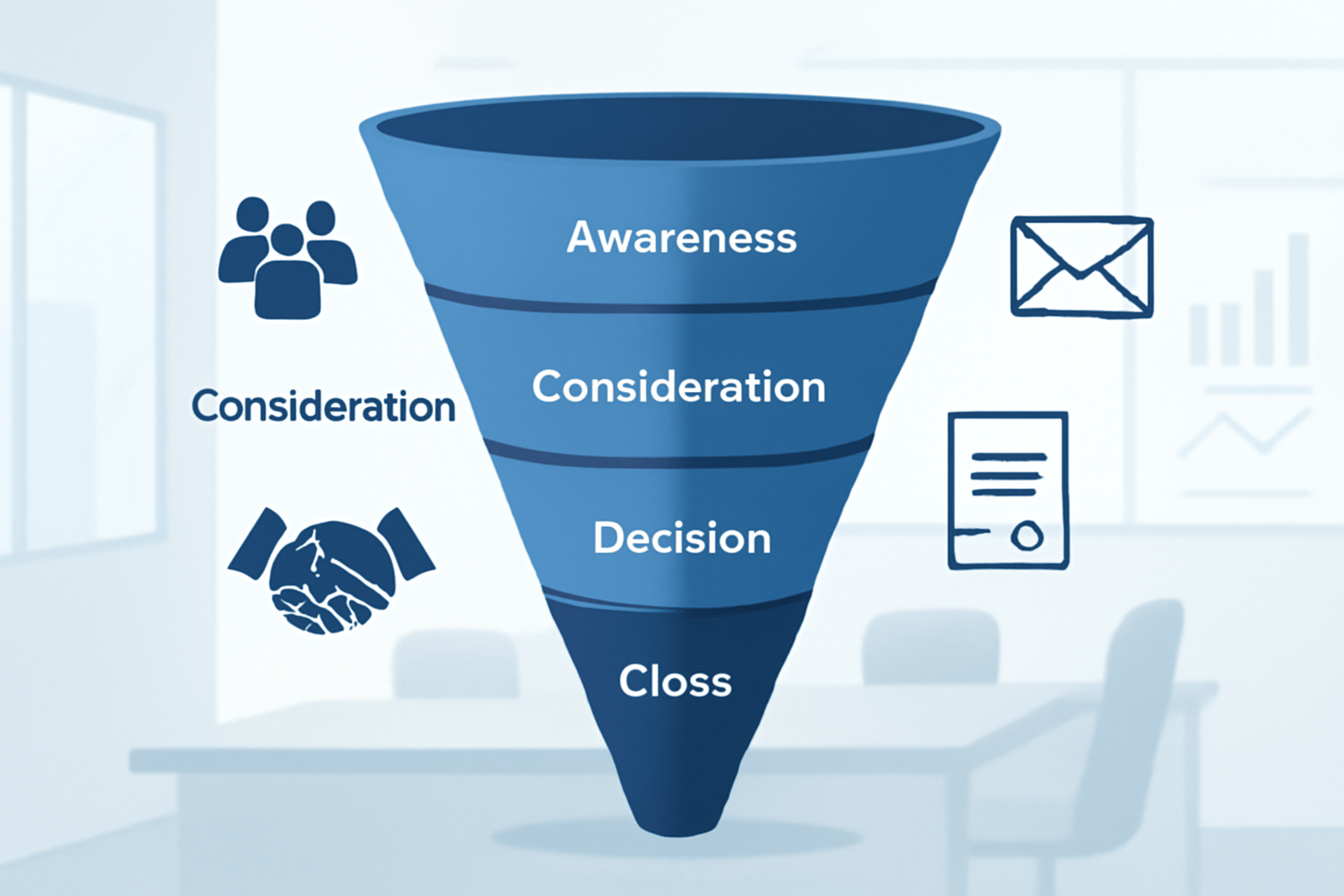
  • Sales Compensation Plans: How to Build One That Works

    Sales Compensation Plans: How to Build One That Works

    Sales Compensation Plans: How to Build One That Works

    The right sales compensation plan can increase revenue by up to 44% — here’s how to design one your team will actually perform for.

    Why Your Sales Comp Plan Might Be Costing You Money Right Now

    According to a 2025 report from the Sales Management Association, nearly 58% of small business owners say their current sales compensation structure either underperforms or actively drives away top talent. That’s a staggering number — and if you’ve ever watched a strong salesperson walk out the door to a competitor, you already know the pain.

    Here’s the hard truth: a poorly designed sales compensation plan doesn’t just fail to motivate your team. It can quietly drain your cash flow, reward the wrong behaviors, and create a culture of resentment — all while your top performers start updating their LinkedIn profiles.

    In this guide, you’ll learn exactly how to build a sales compensation plan that attracts great salespeople, drives the right behaviors, and scales with your business. We’ll cover the most common structures, real-world numbers, IRS tax implications, and the costly mistakes most small business owners make before they get this right.

    Whether you’re setting up your first sales team or fixing a broken comp structure, this guide will give you a clear framework to move forward with confidence.

    What Is a Sales Compensation Plan and How Does It Work?

    A sales compensation plan is a documented structure that defines how your salespeople earn money — including base salary, commission rates, bonuses, and any performance incentives. It’s the financial contract between your business and your sales team, and it signals exactly what you value and what you’re willing to pay for.

    There are two core components in most plans:

    • Fixed pay: A guaranteed base salary regardless of performance
    • Variable pay: Commission, bonuses, or incentives tied directly to results

    The mix between fixed and variable pay is often called the pay mix. For example, a 60/40 pay mix means 60% of a salesperson’s on-target earnings (OTE) come from base salary and 40% come from hitting their quota.

    According to the Bureau of Labor Statistics, the median annual wage for sales representatives in the US was approximately $68,000 in 2025 — but total compensation including commissions can easily reach $90,000 to $130,000+ for high performers in B2B industries.

    Your comp plan matters because it directly affects who you attract, how hard they work, and how long they stay. Get it right, and it becomes your most powerful growth tool. Get it wrong, and it’s a slow leak in your revenue pipeline.

    Key Benefits of a Well-Designed Sales Compensation Plan

    A strong compensation structure does far more than just pay your salespeople. When designed well, it works as a strategic tool that aligns individual behavior with your company’s goals.

    1. It drives the right behaviors. If you pay commission only on new accounts, your team will focus on new accounts — sometimes at the expense of existing customers who generate recurring revenue. Your comp plan should reward the activities that actually grow your business sustainably.

    2. It reduces costly turnover. The average cost of replacing a sales rep is estimated at 150% to 200% of their annual salary, according to research from Glassdoor and SHRM. When salespeople feel fairly compensated and see a clear path to earning more, they stay longer — saving you significant recruiting and training costs.

    3. It gives you a competitive recruiting edge. Top sales talent has options. A transparent, generous comp plan with realistic quotas can be the deciding factor when a strong candidate is choosing between you and a larger competitor.

    4. It creates predictable revenue forecasting. When you understand what quota attainment looks like at different performance levels, you can model your revenue projections more accurately — which also helps with business cash flow management.

    A 2024 study by Xactly Corp found that companies with clearly documented comp plans saw 14% higher quota attainment rates compared to those with informal or inconsistent structures. That’s a meaningful lift that compounds over time.

    The Most Common Sales Compensation Structures

    Before you build your plan, you need to choose the right structure for your business model, sales cycle, and team size. Here are the six most common models used by US small businesses:

    1. Straight Salary

    Salespeople earn a fixed salary with no commission. This works well for long sales cycles, highly technical products, or roles where team selling makes individual attribution difficult. The downside: it removes the performance incentive that makes great salespeople shine.

    2. Straight Commission

    Reps earn only what they sell — no base salary. This can attract highly motivated hunters, but it creates income instability that drives turnover and can discourage reps from investing time in long-term relationship building. Generally speaking, this model works best for independent contractors rather than full-time employees.

    3. Base Salary Plus Commission (Most Common)

    This hybrid model is the most widely used structure in US small businesses. Reps get security from a base and upside from commission. A common structure: $45,000–$60,000 base with a 5%–15% commission rate on closed deals. This balances stability with strong performance incentives.

    4. Tiered Commission

    Commission rates increase as reps hit higher performance thresholds. For example: 5% on the first $100K in sales, 8% on $100K–$250K, and 12% on anything above $250K. This structure rewards your top performers disproportionately and encourages reps to push past their quota — not just reach it.

    5. Revenue Share

    Reps earn a percentage of total revenue from their accounts, including renewals. This is common in SaaS and subscription businesses where customer lifetime value matters more than a single transaction.

    6. Bonus-Based Plans

    Reps earn a base salary plus quarterly or annual bonuses tied to hitting team or individual targets. Less common as a primary comp model, but frequently used as a supplement to commission-based plans.

    For most small business owners building a sales team for the first time, the base salary plus tiered commission model offers the best balance of motivation, stability, and alignment with business goals. If you’re still building your initial B2B sales funnel, start simple and add complexity as you scale.

    How to Build Your Sales Compensation Plan: Step-by-Step

    Here’s a practical framework you can implement in your business, even if you’re starting from scratch:

    1. Define your on-target earnings (OTE). OTE is the total compensation a rep earns when they hit 100% of quota. Research your local market using Glassdoor, LinkedIn Salary, and the BLS to find competitive OTE ranges for your role and industry. In most US markets, B2B sales reps expect OTE between $65,000 and $110,000 depending on industry and experience.
    2. Set your pay mix. Decide the ratio of base to variable pay. A common starting point for small business inside sales is 70/30 (70% base, 30% variable). For more aggressive field sales roles, 50/50 or even 40/60 is reasonable.
    3. Establish realistic quotas. A quota should be achievable for roughly 60%–70% of your team — not a stretch goal only your best rep can hit. Industry benchmarks suggest quota should be 4x to 6x the rep’s OTE for most B2B businesses.
    4. Define your commission rate. Work backwards: if OTE is $90,000 with a 60/40 mix, variable pay at quota is $36,000. If quota is $500,000 in annual revenue, your commission rate is approximately 7.2%.
    5. Add performance accelerators. Consider paying higher commission rates (accelerators) when reps exceed quota. For example, 1.5x the standard rate for everything above 100% of quota. This is the strongest motivator for top performers.
    6. Set your commission payment schedule. Most small businesses pay commissions monthly or quarterly. Avoid paying too far after the close — it weakens the psychological connection between effort and reward. The IRS treats commissions as supplemental wages, subject to a flat 22% federal withholding rate (or your normal payroll rate if added to regular pay).
    7. Document everything. Create a clear, signed comp plan agreement for each rep. Include quota, rate, payment timing, clawback provisions, and what happens if a deal is cancelled or refunded. Ambiguity here is where lawsuits start.

    Costs, Fees, and Tax Implications to Know

    Your comp plan doesn’t just affect your top line — it has real tax and cash flow implications you need to plan for carefully.

    Payroll taxes: For W-2 employees, you’ll owe employer-side FICA taxes (7.65%) on base salary and commissions. For a rep earning $85,000 total, that’s roughly $6,500 in employer payroll taxes annually per employee.

    Commission clawbacks: If a customer cancels or defaults, will you require reps to return commissions already paid? Clawback provisions are legal in most US states but must be clearly documented in the comp agreement. Failing to do this can cost you significantly if a large deal falls through post-commission payment.

    1099 vs. W-2 classification: The IRS has strict rules about worker classification. Misclassifying an employee as an independent contractor to avoid payroll taxes can result in back taxes, penalties, and interest. Generally speaking, if you control when, where, and how someone works, they’re likely an employee — consult a CPA before classifying anyone as a contractor.

    Draw against commission: Some businesses offer a recoverable draw — a guaranteed minimum payment that reps pay back from future commissions. This helps with rep cash flow during ramp-up but creates accounting complexity and potential disputes if a rep leaves before repaying.

    If cash flow is a concern while scaling your sales team, review your business line of credit options to ensure you can fund payroll during growth phases without creating operational stress.

    Common Mistakes to Avoid When Setting Up Sales Comp

    These are the errors that cost small business owners the most — both in money and in talent:

    Mistake #1: Setting unrealistic quotas. If fewer than 50% of your reps consistently hit quota, the quota is wrong — not the reps. Unachievable quotas destroy morale, increase turnover, and signal to candidates that your comp plan is misleading. Review quota attainment quarterly and adjust when market conditions shift.

    Mistake #2: Overcomplicating the plan. If a rep can’t calculate their paycheck on a napkin, the plan is too complex. Complicated comp plans create distrust, reduce motivation, and generate constant disputes. Start simple: one or two metrics, a clear rate, a predictable schedule.

    Mistake #3: Ignoring the ramp period. New reps take 3–6 months to reach full productivity. If you put them on full quota from day one, you’ll lose them before they’ve learned your product. Build in a ramp schedule — for example, 50% of quota in month 1, 75% in month 2, 100% from month 3 onward.

    Mistake #4: Not documenting clawback and cancellation policies. This is one of the most common sources of legal disputes between small businesses and sales reps. Always define upfront: what happens to commissions if a deal is cancelled, refunded, or never paid by the customer?

    Mistake #5: Paying commission on revenue instead of gross profit. If your margins vary significantly across products or services, a revenue-based commission incentivizes reps to sell whatever closes fastest — not necessarily what’s most profitable for your business. Consider paying commission on gross profit instead to align incentives with business health.

    Alternatives to Traditional Sales Compensation Models

    If a traditional salary-plus-commission model doesn’t fit your business, here are three alternatives worth considering:

    1. Profit-sharing plans. Instead of individual commissions, reps participate in a company-wide profit pool based on overall business performance. This promotes collaboration and long-term thinking but can reduce individual motivation for top performers. Under IRS rules, qualified profit-sharing plans have annual contribution limits of up to 25% of eligible compensation.

    2. Equity or phantom equity. For early-stage businesses that can’t yet compete on cash compensation, offering equity (or phantom equity — a cash bonus tied to company value milestones) can attract senior sales talent willing to bet on growth. This requires careful legal documentation and is most common in venture-backed startups.

    3. Referral and partnership programs. If you’re not ready to build a full internal sales team, a structured referral or affiliate partner program can generate qualified leads at a fraction of the cost. Commission rates for referral partners typically range from 5% to 20% of deal value, depending on the level of involvement in the sale.

    Frequently Asked Questions

    What is a good commission rate for a small business sales rep?
    Commission rates vary widely by industry, but for B2B small businesses, 5%–12% of gross revenue is a common range. SaaS and subscription businesses often pay 8%–15% on first-year revenue, plus residuals on renewals. Work backwards from your OTE target and quota to land on a rate that’s competitive and financially sustainable.

    How often should I pay sales commissions?
    Monthly is the most common payment schedule and offers the best balance between administrative simplicity and keeping reps motivated. Quarterly works for longer sales cycles. Avoid paying commissions only once a year — the disconnect between work and reward is too large to be motivating.

    Should I use W-2 employees or 1099 contractors for sales?
    In most cases, sales reps who work exclusively for your company, follow your processes, and use your tools will be classified as W-2 employees under IRS guidelines. Misclassification as a 1099 contractor can result in significant tax penalties. Consult a CPA or employment attorney before making this decision.

    What is a draw against commission?
    A draw is an advance against future commissions — essentially a guaranteed minimum payment during ramp-up. A recoverable draw must be paid back from future commissions. A non-recoverable draw does not. Most small businesses use recoverable draws for the first 60–90 days only.

    How do I know if my comp plan is working?
    Track three core metrics: quota attainment rate (target: 60%–70% of reps hitting quota), sales rep turnover rate (industry benchmark: under 25% annually), and time-to-productivity for new hires. If any of these metrics are significantly off-target, your comp plan likely needs adjustment.

    The Bottom Line: Your Comp Plan Is a Growth Strategy

    A well-built sales compensation plan is one of the highest-leverage investments a small business owner can make. It doesn’t just pay your salespeople — it shapes culture, drives behavior, attracts talent, and ultimately determines how fast your business grows.

    Start with a simple, transparent structure. Set realistic quotas. Pay competitively for your market. Build in accelerators that reward your best performers. And document everything clearly so there’s no ambiguity when big commissions are on the line.

    Review your comp plan at least once a year — ideally before each new fiscal year — and adjust for changes in your market, team size, and product mix. The best comp plans evolve as your business grows.

    Take the time to get this right, and your sales team will become your most powerful competitive advantage.

    This article is for educational purposes only and does not constitute financial, tax, or investment advice. Always consult a licensed financial advisor, CPA, or attorney before making financial decisions.

  • B2B Sales Funnel: How to Build and Optimize Yours

    B2B Sales Funnel: How to Build and Optimize Yours

    B2B Sales Funnel: How to Build and Optimize Yours

    Companies that optimize their B2B sales funnel see up to 36% higher win rates — here’s exactly how to build one that converts.

    Why Your B2B Sales Funnel Is the Backbone of Revenue

    According to the Harvard Business Review, companies with a clearly defined sales process generate 18% more revenue than those operating without one. Yet, a 2025 Salesforce report found that nearly 68% of small business owners in the US have never formally mapped their sales funnel — they’re just winging it and hoping deals close.

    If you’re a small business owner or sales manager, that statistic should stop you cold. A B2B sales funnel isn’t just a buzzword. It’s the structured path that turns a complete stranger into a paying client — and then keeps that client coming back.

    In this guide, you’ll learn exactly what a B2B sales funnel is, how to build one from scratch, which metrics actually matter, where most funnels leak money, and how to fix the most common mistakes. Whether you’re closing $20,000 contracts or $200,000 deals, the framework works the same way.

    This is for educational purposes — consult a licensed financial advisor or business consultant for personalized guidance.

    What Is a B2B Sales Funnel and How Does It Work?

    A B2B sales funnel (business-to-business sales funnel) is a model that maps every stage a potential business client moves through — from the moment they first hear about you to the moment they sign a contract and beyond.

    Unlike B2C (business-to-consumer) purchases, B2B sales cycles are typically longer, involve multiple decision-makers, and require significantly more trust-building before money changes hands. The average B2B sales cycle in the US lasts 84 days, according to a 2025 Gartner study — and for deals above $50,000, that number often stretches past six months.

    The funnel is usually broken into four core stages:

    • Awareness: The prospect learns your business exists.
    • Interest/Consideration: They actively research your solution.
    • Decision: They evaluate you against competitors and negotiate terms.
    • Action/Close: They sign, pay, and become a customer.

    Some models add a fifth stage — Retention and Expansion — which is where the most profitable B2B companies make their real money through upsells, renewals, and referrals.

    Understanding which stage each prospect is in tells you exactly what message to send, what content to show them, and how urgently to follow up.

    Key Benefits of Optimizing Your Sales Funnel

    Here’s the business case for taking your funnel seriously. A 2024 McKinsey report found that B2B companies with optimized sales funnels achieve 2.9x higher revenue growth compared to industry peers who rely on ad hoc selling.

    Let’s break down what that looks like in practical, dollar terms for a small business:

    Shorter sales cycles: When prospects receive the right information at the right stage, they make decisions faster. A business closing 10 deals per quarter at a $15,000 average contract value that cuts its cycle from 90 days to 60 days effectively frees up cash flow and capacity to pursue more deals.

    Higher conversion rates: The average B2B lead-to-close conversion rate hovers around 3-5% across industries (Salesforce, 2025). Funnel optimization can realistically push that to 8-12% — potentially doubling revenue without increasing your marketing budget.

    Better forecasting: When you know how many leads enter each funnel stage and what percentage advance, you can predict monthly revenue with real accuracy. That kind of visibility is critical when managing payroll, inventory, or applying for a business line of credit.

    Reduced customer acquisition cost (CAC): Disorganized sales efforts waste time on unqualified prospects. A defined funnel filters leads early so your team spends energy where it actually converts to revenue.

    How to Build Your B2B Sales Funnel: Step-by-Step

    Building a funnel that works isn’t complicated — but it does require intentional design at every stage. Here’s a practical, numbered process you can apply to your business starting this week.

    Step 1: Define Your Ideal Customer Profile (ICP)

    Before you build anything, you need to know exactly who you’re selling to. Your ICP should include company size (employee count, annual revenue), industry vertical, decision-maker job title, geography, and the specific pain point your product or service solves.

    For example: “CFOs at manufacturing companies with $5M–$50M in annual revenue located in the Midwest who are struggling with cash flow forecasting.” The more specific, the better your funnel will perform.

    Step 2: Map Your Lead Sources

    Identify where your best clients currently come from. Common B2B lead sources include LinkedIn outreach, inbound content marketing (blog, SEO), referrals, trade shows, email campaigns, and paid ads. Your funnel needs a steady stream at the top — without leads entering, nothing else matters.

    If you haven’t invested in content as a lead source, a content marketing strategy for small businesses can generate qualified inbound leads at a fraction of the cost of paid advertising over time.

    Step 3: Create Stage-Specific Content and Touchpoints

    Each funnel stage needs different content:

    • Awareness: Blog posts, LinkedIn articles, podcast appearances, paid ads
    • Consideration: Case studies, comparison guides, webinars, email sequences
    • Decision: Proposals, demos, ROI calculators, client testimonials, reference calls
    • Retention: Onboarding materials, quarterly business reviews, upsell offers

    Step 4: Set Up a CRM

    A Customer Relationship Management (CRM) tool is non-negotiable. Tools like HubSpot (free tier available), Salesforce, or Pipedrive let you track every prospect’s stage, set follow-up reminders, and measure conversion rates between stages. Without a CRM, your funnel exists only in people’s heads — and deals fall through the cracks constantly.

    Step 5: Define Your Follow-Up Cadence

    Studies from the National Sales Executive Association show that 80% of sales require five or more follow-up contacts after an initial meeting — yet 44% of salespeople give up after just one follow-up. Build a structured sequence: initial outreach, follow-up at 3 days, 7 days, 14 days, and 30 days, each with a different angle or value add.

    Step 6: Measure and Adjust Monthly

    Track these core funnel metrics every month: number of new leads, lead-to-opportunity rate, opportunity-to-proposal rate, proposal-to-close rate, average deal size, and average sales cycle length. Identify your weakest stage and focus improvement efforts there first.

    Costs, Fees, and Risks of Building a Sales Funnel

    Building a B2B sales funnel isn’t free, and it’s important to understand the real investment involved. According to the U.S. Bureau of Labor Statistics, small businesses typically allocate 7-12% of gross revenue to sales and marketing combined — and sales funnel infrastructure is a major component of that spend.

    CRM software: HubSpot’s free plan covers basics, but paid plans start at $20/month per seat and scale to $1,200+/month for enterprise features. Salesforce starts around $25/user/month for basic functionality. Budget $100–$500/month for a small sales team.

    Content and lead generation: Producing quality content, running LinkedIn ads, or hiring an SDR (Sales Development Representative) all carry real costs. LinkedIn lead gen campaigns can run $8–$15 per click in competitive B2B categories.

    Time investment: The hidden cost most business owners underestimate. Building a proper funnel, training your team, and iterating based on data takes dozens of hours upfront — time that comes from somewhere else in your business.

    Risks: Over-engineering your funnel early is a real danger. Too many stages, too much automation, or an overly complex CRM setup can actually slow your team down. Start simple. Also, be cautious about investing heavily in paid lead generation before you’ve validated that your funnel can actually close the leads it receives — burning ad spend on a leaky funnel is a costly mistake.

    Common Mistakes That Kill B2B Sales Funnels

    Most sales funnels don’t fail because of bad products. They fail because of predictable, fixable errors. Here are the most damaging ones — and how to avoid them.

    Mistake #1: Treating every lead the same. Not all leads are created equal. Sending a bottom-of-funnel product demo to someone who just downloaded a top-of-funnel awareness blog post will kill the relationship. Segment your leads by stage and send stage-appropriate communication. Skipping this step is one of the most expensive errors in B2B sales.

    Mistake #2: Neglecting the follow-up. As mentioned above, most B2B deals close after five or more touchpoints. If your team stops following up after one or two unanswered emails, you’re leaving significant revenue on the table. Build automated follow-up sequences in your CRM so no lead goes cold by accident.

    Mistake #3: Unclear qualification criteria. If your sales team doesn’t know what a “qualified” lead looks like, they’ll waste hours on prospects who can’t or won’t buy. Define your minimum qualifying criteria — budget, authority, need, and timeline (commonly known as BANT) — and apply them at the top of the funnel to protect your team’s time.

    Mistake #4: Ignoring post-sale retention. The bottom of the funnel is often completely ignored. A 2024 Bain & Company study found that increasing customer retention by just 5% can increase profits by 25–95%. If you’re focused only on acquiring new clients and not on keeping existing ones happy, you’re building a leaky bucket — spending to fill the top while clients exit the bottom.

    Mistake #5: No written funnel documentation. If your sales process lives only in one person’s head, your business is fragile. Document every stage, every touchpoint, every script, and every piece of content. This enables hiring, training, and consistent execution across your team.

    Alternatives to a Traditional Sales Funnel

    The classic linear funnel model isn’t the only framework available. Depending on your business model and market, one of these alternatives might serve you better — or complement your existing funnel.

    The Flywheel Model: Popularized by HubSpot, the flywheel replaces the linear funnel with a circular model centered on customer delight. Happy customers generate referrals, which feed awareness, which generates new leads organically. This model works best for businesses with strong recurring revenue or subscription models. Pro: Reduces CAC dramatically over time. Con: Takes longer to gain momentum and requires exceptional customer service infrastructure.

    Account-Based Marketing (ABM): Instead of generating many leads and filtering them down, ABM identifies a specific list of high-value target accounts and markets directly to decision-makers within those companies. According to the ITSMA, 87% of B2B marketers say ABM delivers higher ROI than other marketing approaches. Pro: Highly efficient for large deal sizes. Con: Resource-intensive and requires tight sales and marketing alignment.

    Referral-Based Sales System: For many small businesses, the most cost-effective “funnel” is a structured referral program — systematically asking current clients for introductions to their networks. This requires a formal process: asking at the right moment (typically 60–90 days into a successful engagement), offering clear incentives where appropriate, and tracking referral sources. Pro: Lowest CAC of any channel. Con: Hard to scale beyond a certain revenue level without supplementing with outbound or inbound strategies.

    If you’re in the early stages of business development, a solid business plan can help you determine which sales model aligns best with your growth goals and capital structure.

    Frequently Asked Questions

    How long does it take to build a B2B sales funnel?
    Generally speaking, a basic funnel with a CRM, defined stages, and initial content can be set up in 2–4 weeks. A fully optimized funnel with tested messaging, automated sequences, and measurable conversion rates typically takes 3–6 months of iteration. Don’t expect perfection on day one — the funnel improves as you collect data.

    How many leads do I need at the top of my funnel?
    This depends on your conversion rate and revenue goal. If your average deal size is $10,000, your close rate is 5%, and you need $500,000 in annual revenue, you need 1,000 qualified leads per year — roughly 83 per month entering the top of your funnel. Work backward from your revenue target to calculate your required lead volume.

    What’s the best CRM for a small business sales funnel?
    For most small businesses (1–10 person sales teams), HubSpot’s free or Starter tier offers strong value. Pipedrive ($14–$99/month per user) is excellent for teams focused purely on sales pipeline management. Salesforce is powerful but typically overkill and overpriced for businesses under $5M in revenue. The best CRM is the one your team will actually use consistently.

    At what point should I hire a dedicated salesperson?
    In most cases, hiring a dedicated salesperson makes financial sense when your own sales activities are consistently generating more qualified leads than you can personally follow up on, or when your revenue is sufficient to support a base salary plus commission — typically around $80,000–$120,000 in total compensation for an experienced B2B sales rep. Until then, systematizing your own outreach is usually more cost-effective.

    Can I automate my entire B2B sales funnel?
    Partially, yes — but be careful. Email sequences, lead scoring, CRM updates, and appointment scheduling can all be automated effectively. However, the high-value conversations, discovery calls, and proposal stages in B2B sales require genuine human engagement. Over-automating those interactions often signals inauthenticity and costs you deals. Use automation to handle the administrative weight, not to replace relationship-building.

    Build the Funnel, Close More Deals

    A well-designed B2B sales funnel is one of the highest-leverage investments a small business can make. It brings consistency, predictability, and scalability to what often feels like a chaotic, relationship-dependent revenue stream.

    Start with the basics: define your ICP, map your lead sources, set up a CRM, and build stage-specific follow-up sequences. Measure your conversion rates monthly and fix the weakest link in the chain first. Avoid the common traps — treating all leads the same, abandoning follow-up too early, and neglecting retention after the sale.

    Most importantly, remember that a funnel is never truly finished. The best sales organizations treat it as a living system that improves with every closed deal and every lost opportunity analyzed.

    Take one step today: open a spreadsheet or free HubSpot account and map the last 10 deals you closed. Where did they come from? How long did they take? That’s your funnel in its current form — and it’s your starting point for something significantly more powerful.


    Financial Disclaimer: This article is for educational purposes only and does not constitute financial, tax, or investment advice. Always consult a licensed financial advisor, CPA, or attorney before making financial decisions.